16 January 2015

Understanding A "Coat of Arms"

The Coat Of Arms

What it really means,  what is significant about it.  How does it compare with other cultures acheivements.
Coat Of Arms, Heraldic, Family History, Family Acheivements, Family Fun, Family, Ancestors, Ancestor Acheivments, family Genealogy, Genealogy
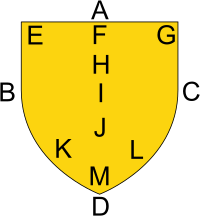
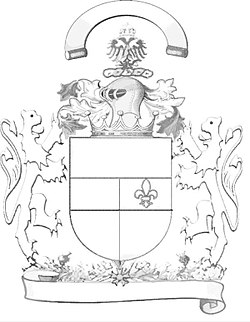
A blank Coat Of Arms.  Each area is designated for certain elements.  The following diagram lists out what achievement goes where on the Coat Of Arms.  Very strict rules by the way.

Coat Of Arms, Heraldic, Family History, Family Acheivements, Family Fun, Family, Ancestors, Ancestor Acheivments, family Genealogy, Genealogy
Points of an escutcheon or heraldic shield:[1]
A – Chief
B – Dexter
C – Sinister
D – Base
E – Dexter Chief
F – Middle Chief
G – Sinister Chief
H – Honour Point
I – Fess Point
J – Nombril Point
K – Dexter Base
L – Sinister Base
M – Middle Base (seldom used)


A coat of arms is a unique heraldic design on an escutcheon (i.e. shield), surcoat, or tabard. A surcoat, and subsequently a coat of arms was used by medieval knights to cover, protect, and identify the wearer. Thus these are sometimes called coat armory. The coat of arms on an escutcheon forms the central element of the full heraldic achievement which consists of shield, supporters, crest, and motto. The design is a symbol unique to an individual person or family (except in the UK), corporation, or state. Such displays are commonly called armorial bearings, armorial devices,heraldic devices, or simply arms.
Sometimes the term coat of arms is used to refer to the full achievement, but this usage is wrong in a strict sense of heraldic terminology.[1][2]
The ancient Romans used similar insignias on their shields, but these identified military units rather than individuals. The first evidence of medieval coats of arms is found in the Bayeux Tapestry from the 11th Century, where some of the combatants carry shields painted with crosses. Coats of arms came into general use by feudal lords and knights in battle in the 12th Century. By the 13th Century arms had spread beyond their initial battlefield use to become a kind of flag or logo for families in the higher social classes of Europe, inherited from one generation to the next. Exactly who had a right to use arms, by law or social convention, varied to some degree between countries. In the German-speaking region both the aristocracy and burghers (non-noble free citizens) used arms, while in most of the rest of Europe they were limited to the aristocracy. The use of arms spread to Church clergy, and to towns as civic identifiers, and to royally-chartered organizations such as universities and trading companies. Flags developed from coats of arms, and the arts of vexillology and heraldry are closely related. The coats of arms granted to commercial companies are a major source of the modern logo.

=====In the movie "THE EAGLE"  
Despite no widespread regulation, and even with a lack in many cases of national regulation, heraldry has remained rather consistent across Europe, where traditions alone have governed the design and use of arms.[citation needed] Unlike seals and other general emblems, heraldic achievements have a formal description called a blazon, expressed in a jargon that allows for consistency in heraldic depictions.
Coat Of Arms, Heraldic, Family History, Family Acheivements, Family Fun, Family, Ancestors, Ancestor Acheivments, family Genealogy, Genealogy
In the 21st century, coats of arms are still in use by a variety of institutions and individuals; for example, many European cities and universities have guidelines on how their coats of arms may be used, and protect their use as trademarks.[3][4][5] Many societies exist that also aid in the design and registration of personal arms. Some nations, like England and Scotland, still maintain the same heraldic authorities which have traditionally granted and regulated arms for centuries and continue to do so in the present day.

Shapes of the Sheild veried.
Coat Of Arms, Heraldic, Family History, Family Acheivements, Family Fun, Family, Ancestors, Ancestor Acheivments, family Genealogy, Genealogy
Examples of escutcheon shapes: 1: mediaeval French & English "heater style"; 2: modern French; 3: cartouche (oval); 4: lozenge (usually borne by women); 5: rectangular; 6: Italian; 7: Swiss, 8: English,Tudor arch (16th century); 9: à bouche; 10: Polish; 11: traditional Iberian

Inescutcheons as mobile charges[edit]

Inescutcheons may appear in personal and civic armory as simple mobile charges, for example the arms of the House of Mortimer or the noble French family of Abbeville. These mobile charges are of a particular tincture but do not necessarily bear further charges and may appear anywhere on the main escutcheon, their placement being specified in the blazon, if in doubt.
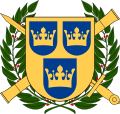
Inescutcheons may also be charged with other mobile charges, such as in the arms of the Swedish Collegium of Arms (illustrated below) which bears the three crowns of Sweden, each upon its own escutcheon upon the field of the main shield. These inescutcheons serve as a basis for including other charges that do not serve as an augmentation or hereditary claim. In this case, the inescutcheons azure allow the three crowns of Sweden to be placed upon a field, thus not only remaining clearly visible but also conforming to the rule of tincture.

Inescutcheon of pretence[edit]

Inescutcheons may also be used to bear another's arms in "pretense".[note 1] In English Heraldry the husband of an heraldic heiress, the sole daughter and heiress of an armigerous man (i.e. a lady without any brothers), rather than impaling his wife's paternal arms as is usual, must place her paternal arms in an escutcheon of pretence in the centre of his own shield as a claim ("pretence") to be the new head of his wife's family, now extinct in the male line. In the next generation the arms are quartered by the son.

Use by monarchs and states[edit]

A monarch's personal or hereditary arms may be borne on an inescutcheon en surtout over the territorial arms of his/her domains,[note 2] as in the arms of Spain, thecoats of arms of the Danish Royal Family members, the greater coat of arms of Sweden, or the arms of Oliver Cromwell as Lord Protector of the Commonwealth of England (1653–1659). The early Georgian kings of England bore an inescutcheon of the royal arms of Hanover on the arms of the Stuart monarchs of Great Britain, whose territories they now ruled.

This is mearly a small introduction to Coat Of Arms.  Please discover more.


All visual items came from Wikipedia


06 January 2015

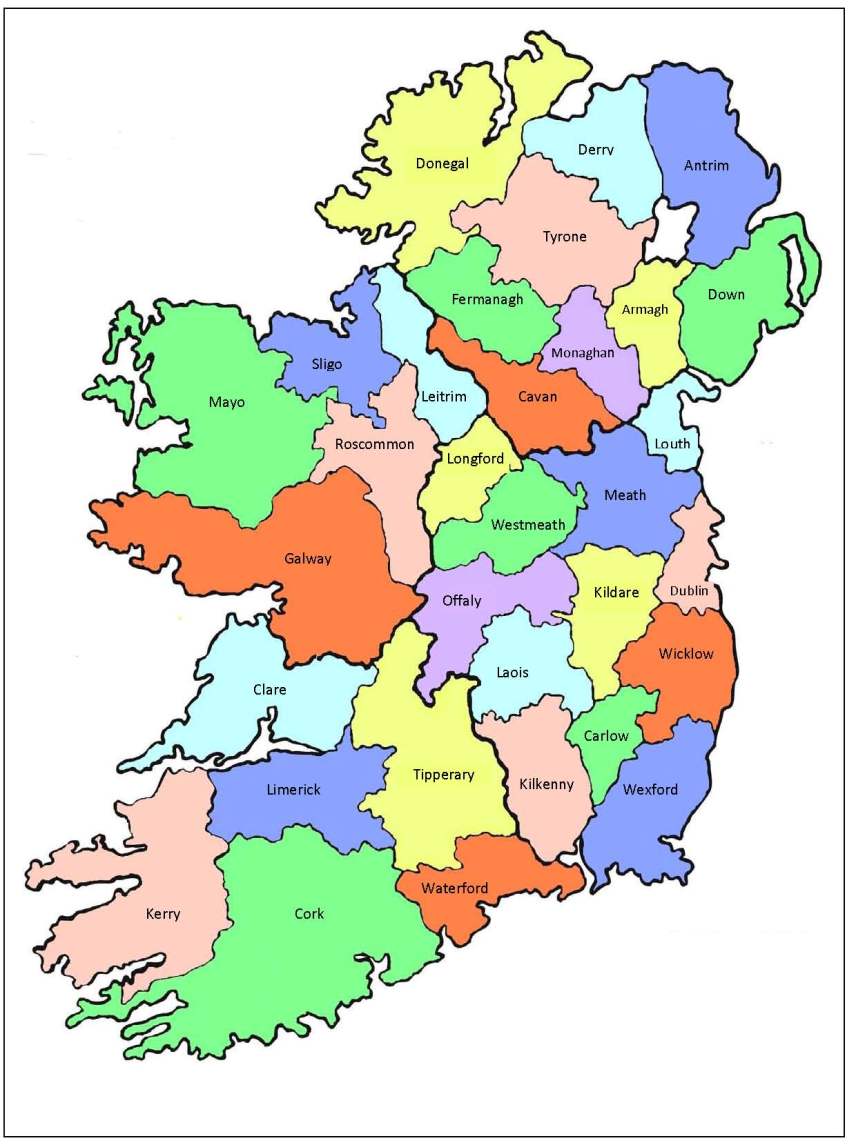
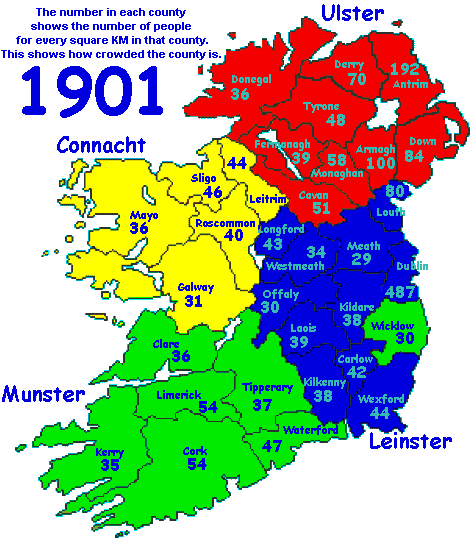
Ireland Mapping the History, Where was your Kin From in Ireland?


Ireland, Ireland Maps, Irish,  Irish mythology, Irish Facts, Kin, Kin Folk, Family History, Irish Family History, Irish Genealogy, Genealogy, Kinsmen, Ulster Red Hand, Ulster, Family, Fun
To use this map follow the link below

http://www.rootsweb.ancestry.com/~irlkik/ihm/

Really great WebSite from rootsweb.  Alot of Information. especially where the Irish folk originate.  You will want to know about your Irish kin.  This site will help you.


Ireland, Ireland Maps, Irish,  Irish mythology, Irish Facts, Kin, Kin Folk, Family History, Irish Family History, Irish Genealogy, Genealogy, Kinsmen, Ulster Red Hand, Ulster, Family, Fun

www.irish-genealogy-toolkit.com%2Fcounties-of-Ireland.html&ei=EMerVOi4A47IsQSloIH4Dg&bvm=bv.82001339,d.cWc&psig=AFQjCNGJi7JDGjGE2BD4WD_fdrK__Sb-hQ&ust=1420630055394191


http://www.clankelly.org/resources/images/imagemap.gif


Ireland, Ireland Maps, Irish,  Irish mythology, Irish Facts, Kin, Kin Folk, Family History, Irish Family History, Irish Genealogy, Genealogy, Kinsmen, Ulster Red Hand, Ulster, Family, Fun
http://homepage.tinet.ie/~cronews/geog/census/codense1901.gif

Then you know the Irish Revolution comes in about 12 years.  Which yet again changes boundries.  So mapping your folks lives might be helpful.


03 January 2015

THE BLACK IRISH Origins ?? Questions

Black Irish, Erin Go Bragh, Ireland forever, Irish, Family History, Genealogy, Irish Genealogy, Black Irish French, Families, Irish Family Lore, Irish Family Genealogy
WHO WERE THE BLACK IRISH?
=========================

The term 'Black Irish' has commonly been in circulation among Irish emigrants and their descendants for centuries. As a subject of historical discussion the subject is almost never referred to in Ireland. There are a number of different claims as to the origin of the term, none of which are possible to prove or disprove.

'Black Irish' is often a description of people of Irish origin who had dark features, black hair, dark complexion and eyes.

A quick review of Irish history reveals that the island was subject to a number of influxes of foreign people. The Celts arrived on the island about the year 500 B.C. Whether or not this was an actual invasion or rather a more gradual migration and assimilation of their culture by the natives is open to conjecture, but there is sufficient evidence to suggest that this later explanation is more likely. The next great influx came from Northern Europe with Viking raids occurring as early as 795 A.D. The defeat of the Vikings at the Battle of Clontarf in the year 1014 by Brian Boru marked the end of the struggle with the invaders and saw the subsequent integration of the Vikings into Irish society. The migrants became 'Gaelicized' and formed septs (a kind of clan) along Gaelic lines.

The Norman invasions of 1170 and 1172 led by Strongbow saw yet another wave of immigrants settle in the country, many of whom fiercely resisted English dominance of the island in the centuries that followed. The Plantation of Ulster in the seventeenth century saw the arrival of English and Scottish colonists in Ulster after the 'Flight of the Earls'.

Each of these immigrant groups had their own physical characteristics and all, with the exception of the Ulster Planters, assimilated to some degree into Irish society, many claiming to be 'more Irish than the Irish themselves!'

The Vikings were often referred to as the 'dark invaders' or 'black foreigners'. The Gaelic word for foreigner is 'gall' and for black (or dark) is 'dubh'. Many of the invaders families took Gaelic names that utilised these two descriptive words. The name Doyle is in Irish 'O'Dubhghaill' which literally means 'dark foreigner' which reveals their heritage as an invading force with dark intentions. The name Gallagher is 'O Gallchobhair' which translates as 'foreign help'. The traditional image of Vikings is of pale-skinned blond-haired invaders but their description as 'dark foreigners' may lead us to conclude that their memory in folklore does not just depend on their physical description.

The Normans were invited into Ireland by Dermot McMurrough and were led by the famous Strongbow. Normans are ultimately of French origin where black haired people are not uncommon. As with the Vikings these were viewed as a people of 'dark intentions' who ultimately colonised much of the Eastern part of the country and several larger towns. Many families however integrated into Gaelic society and changed their Norman name to Gaelic and then Anglo equivalents: the Powers, the Fitzpatricks, Fitzgeralds, Devereuxs, Redmonds.

It is possible that the term 'Black Irish' may have referred to some of these immigrant groups as a way of distinguishing them from the 'Gaels', the people of ultimately Celtic origin.

Another theory of the origin of the term 'Black Irish' is that these people were descendants of Spanish traders who settled in Ireland and even descendants of the few Spanish sailors who were washed up on the west coast of Ireland after the disaster that was the 'Spanish Armada' of 1588. It is claimed that the Spanish married into Irish society and created a new class of Irish who were immediately recognisable by their dark hair and complexion. There is little evidence to support this theory and it is unlikely that any significant number of Spanish soldiers would have survived long in the war-torn place that was sixteenth century Ireland. It is striking though how this tale is very similar to the ancient Irish legend of the Milesians who settled in Ireland having travelled from Spain.

The theory that the 'Black Irish' are descendants of any small foreign group that integrated with the Irish and survived, is unlikely. It seems more likely that 'Black Irish' is a descriptive term rather than an inherited characteristic that has been applied to various categories of Irish people over the centuries.

One such example is that of the hundreds of thousands of Irish peasants who emigrated to America after the Great Famine of 1845 to 1849. 1847 was known as 'black 47'. The potato blight which destroyed the main source of sustenance turned the vital food black. It is possible that the arrival of large numbers of Irish after the famine into America, Canada, Australia and beyond resulted in their being labelled as 'black' in that they escaped from this new kind of black death.

Immigrant groups throughout history have generally been treated poorly by the indigenous population (or by those who simply settled first). Derogatory names for immigrant groups are legion and in the case of those who left Ireland include 'Shanty Irish' and almost certainly 'Black Irish'. It is also possible that within the various Irish cultures that became established in America that there was a pecking order, a class system that saw some of their countrymen labelled as 'black'.

The term 'Black Irish' has also been applied to the descendants of Irish emigrants who settled in the West Indies. It was used in Ireland by Catholics in Ulster Province as a derogatory term to describe the Protestant Planters.

While it at various stages was almost certainly used as an insult, the term 'Black Irish' has emerged in recent times as a virtual badge of honour among some descendants of immigrants. It is unlikely that the exact origin of the term will ever be known and it is also likely that it has had a number of different creations depending on the historical context. It remains therefore a descriptive term used for many purposes, rather than a reference to an actual class of people who may have survived the centuries.


The Black Irish - An article provided by The Information about Ireland Site.

USAGE:
THIS ARTICLE MAY BE REPRODUCED ON YOUR WEB SITE OR IN YOUR
EZINE OR NEWSLETTER ONCE THE FOLLOWING COPYRIGHT AND 'LINK' TO THE
INFORMATION ABOUT IRELAND SITE ARE INCLUDED AND LEFT INTACT.

(C) Copyright http://www.ireland-information.com

Black Irish, Erin Go Bragh, Ireland forever, Irish, Family History, Genealogy, Irish Genealogy, Black Irish French, Families, Irish Family Lore, Irish Family Genealogy

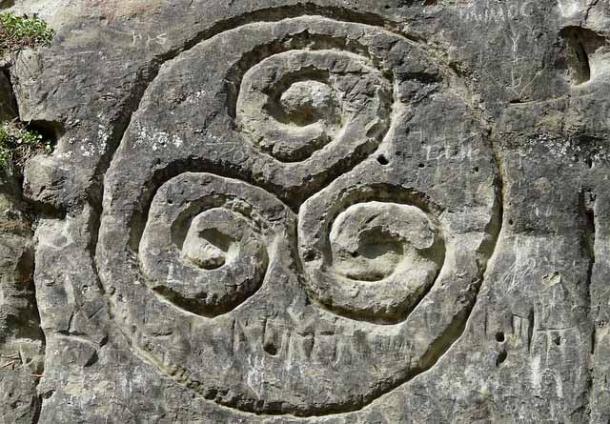
Black Irish, Erin Go Bragh, Ireland forever, Irish, Family History, Genealogy, Irish Genealogy, Black Irish French, Families, Irish Family Lore, Irish Family Genealogy, County Merth, Stone Art in Ireland, Stone Art, Find your Irish,
http://www.megalithic.co.uk/mm/ireland/newgrange_backstone.jpg

Black Irish, Erin Go Bragh, Ireland forever, Irish, Family History, Genealogy, Irish Genealogy, Black Irish French, Families, Irish Family Lore, Irish Family Genealogy, County Merth, Stone Art in Ireland, Stone Art, Find your Irish,
Found all photos on web, click on them find their URL's

01 January 2015

HAPPY 2015 10 GENEALOGY RESOULTIONS

HAPPY 2015
Family History, New Year, 2015, Family Fun, Family, 2015 New Year, My Year
All Images found on the web
10 GENEALOGY RESOULTIONS
  1. Find The Mayflower Connection and be able to Vett It and Prove It.
  2. Join the DAR with the correct information that the paper trail exist.
  3. Have Memorials for all of my 3rd Great-Grandparents on Find A Grave.  Already one of them helped me find Ancestrrol connections.
  4. Using DNA test results from Ancestry.com for better Family connection results. 
  5. Contribute to a Billion Graves.
  6. Find that connection in my DNA results that lead to a southern family connection.
  7. To Explore the Migration pattern of the Ancestors, mostly to find any kin that made a mark in their area.
  8. Martha Gray WHO are her parents?  To find the answer.
  9. Make a List of the Military Ancestors to Honor Their Service and knowing what they did for us.
  10. To Have Fun While Discovery all the abooveFamily History, New Year, 2015, Family Fun, Family, 2015 New Year, My Year , DNA

27 December 2014

Ancestors of Leon David Roper Different kind of Ancestrol Chart

Ancestrol, Ancesrtol Chart, Leon David Roper, Roper,  Hasculfus Musard

Here to follow is a different kind of ancestral Chart.

Which you can find like I did on line at : http://www.roperld.com/daveanc.pdf

Which I was Able to find by typing into the search bar :
                 Jacques Millville b. 1530 Switzerland

Ancestors of Leon David Roper- Ancestors of Leon David Roper-1
19 Jun 2013 Page 1

30. Eudo de St. James-921 (b.Abt 1020-SJ,Manche,N,France)
29. Peter de St. James-5 (b.Abt 1044-SJ,Manche,Normandy,France)
28. Hasculfus Musard-517 (b.Abt 1065-,,Normandy,France;d.Bef 1133-)
27. Robert Musard-3 (b.Abt 1098-Staveley,Chesterfield,D,England;d.1162)
26. Richard Musard-519 (b.Abt 1125-Staveley,,Derby,England;d.Abt 1189-)
25. William Rousper-209 (b.Abt 1175-Staveley,,Derby,England;m.Abt 1215)
27. John Nevill-897
26. Isabel Nevill-896
24. Adam Roper-207 (b.Abt 1216-Staveley,,Derby,England;m.Abt 1246;d.Abt 1275-)
26. Edward Apuldore-20 (b.Bef 1153-Staveley,,Derby,England)
25. Elnith Apuldore-208 (b.Abt 1179-Staveley,,Derby,England)
23. Edwin Roper-206 (b.Abt 1275-,,Kent,England)
22. Adam Roper-924
21. Thomas Roper-178 (b.Abt 1309-Swalecliff,,Kent,England;m.Abt 1330)
20. Ralph Adam Roper-89 (b.Abt 1331-St. Dunstans,C,Kent,England;m.Abt 1359;d.Aft 1402-)
22. Thomas Apuldore-162 (b.Bef 1287-Swalecliff,,Kent,England)
21. Apuldore-165 (b.Abt 1313-Swalecliff,,Kent,England)
19. Edmund Roper-85 (b.Abt 1360-St. Dunstans,C,Kent,England;m.Abt 1400;d.11 Dec 1433-)
21. Thomas Lewkenor-87 (b.Abt 1308-Postling,,Kent,England;d.1375)
20. Beatrix Lewkenor-88 (b.Abt 1335-Gretworth,,Northampton,England;d.1388)
21. Joan d'Oyly-899 (b.1334-Stoke Doyle,,England)
18. John Roper-73 (b.Abt 1405-Swacliffe,,Kent,England;m.Abt 1444;d.11 Jan 1488/1489-)
19. Catherine -898 (b.1380-St. Dunstans,Canterbury,Kent,England)
17. Robert Roper-44 (b.Abt 1449-,,Norfolk,England)
19. John Tattershall-47 (b.Bef 1394-Will Hall,,Kent,England)
18. Margaret Tattershall-48 (b.1420-Eltham,,K,England;d.2 Feb 1517/1518-Eltham,,Kent,England)
20. John Chicheley-21 (b.Bef 1372-Eltham,,Kent,England;d.1446-,Kent,,England)
19. Agnes Chicheley-43 (b.Bef 1398-,Kent,,England;d.1518)
16. Roper-917 (b.Abt 1475)
15. Robert Roper-916 (b.Abt 1500-Hoxne,,Suffolk,England;d.Abt 1532-Hoxne,,Suffolk,England)
14. Robert Roper-918 (b.Abt 1525-Hoxne,,Suffolk,England;d.Bef 1582-,,England)
13. Walter Roper-911 (b.Abt 1550-Hoxne,,Suffolk,England;d.1617)
14. Cassandra Coper-912 (d.Bef 7 Mar 1589-Gissing,,Norfolk,England)
12. Henry Roper-914 (b.Abt 1591-Hoxne,,Suffolk,England;m.16 Apr 1616)
13. Rachel -925
11. John Roper-922 (b.Abt 1620-Hoxne,,Suffolk,England;m.1 Aug 1643;d.Bef 1674-Hoxne,,Suffolk,England)
12. Bridget Dunnett-913 (b.Abt 1595-Hoxne,,Suffolk,England)
10. Thomas Roper-919 (b.Abt 1669-Cotton,,Suffolk,England)
11. Ann White-915 (b.Abt 1625-Eye,,Suffolk,England;d.Jan 1674-Hoxne,,Suffolk,England)
9. John Roper-31 (b.Abt 1699-Wetheringsett,,Suffolk,England;m.Abt 1726;d.Abt 1766-,Fauquier,Va)
10. Elizabeth -920
8. Charles Roper-33 (b.Abt 1720-,,,England;m.Abt 1741;d.Bef 1793-,,Va)
9. Mary -32 (b.1710-,,Va)
7. David Roper-27 (b.29 Jun 1742-,Dinwiddie,Vaz;m.3 Feb 1746;d.1802-,Edgefield,Sc)

 Ancestors of Leon David Roper- Ancestors of Leon David Roper-1
                                                             19 Jun 2013 Page 2

9. Robert Goodwyn-908 (b.Abt 1690;m.Abt 1720)
8. Ann Goodwyn-34 (b.Abt 1720-,,,England)
11. James Goodwyn-904 (b.Abt 12 Mar 1621-SMP,London,M,England;m.Abt 1650;d.1687-,York,Va)
10. Peter Goodwyn-905 (b.Abt 1660/1666;m.Bef 1696/1697;d.Bef 1731/1733-,York,Va)
12. John Hayward-902 (b.Abt 1605-,,,England;m.26 Apr 1629;d.1658-,York,Va)
11. Rachel Hayward-903 (b.Abt 27 Feb 1631-St Botolph Bishopsgate,L,M,England;d.1666-,York,Va)
12. Alice Roper-901 (b.Abt 1605/1608-,,,England)
9. Ann Goodwyn-907 (b.Abt 1700)
10. Rebecca Tiplady-906 (b.Bef 1676-,York,Va)
6. James Roper-18 (b.Abt 1766;m.27 Mar 1792;d.1853-,Burke,NC)
7. Sarah -30 (b.Abt 1740-Charleston,Charleston,Sc;d.Aft 1803)
5. Samuel Roper-14 (b.6 Jan 1806-,Burke,NC;m.12 Nov 1839;d.22 Nov 1869-Murphy,Cherokee,NC)
6. Mary Elizabeth O'Neil-29
4. William Washington Roper-6 (b.19 Sep 1844-,Burke,NC;m.15 Mar 1867;d.8 Jan 1916-Siloam Springs,Howell,MO)
8. Johann George Flohr-37 (b.Abt 1720-,Germany;m.16 Dec 1753)
7. Christopher Flowers-35 (b.4 Feb 1756-Trappe,Montgomery,PA;m.Apr 1784;d.1832-,Catawba,NC)
8. Maria Catharina Motz-38
6. Joseph Flowers-28 (b.Abt 22 Dec 1788-,Berks,PA)
7. Mary Mathlana Schlosser-36 (b.26 Nov 1762-,Germany;d.1 Dec 1852-,Catawba,NC)
5. Rebecca Flowers-15 (b.29 Mar 1817-,Berks,PA;d.9 Sep 1878-Chattanooga,Hamilton,TN)
6. Rebecca Myer-22
3. Joshua Rufus Roper-4 (b.24 Jun 1869-Murphy,Cherokee,NC;m.6 Mar 1892;d.26 Aug 1954-Fort Worth,Tarrant,TX)
7. John Hall-40 (b.Abt 1740-,MD;d.1808/1812-,Burke,NC)
6. Joshua Hall-8 (b.1765-,MD;m.1786;d.1852-Franklin,Macon,GA)
7. Finivill-41 (d.Bef 1821)
5. Moses W Hall-16 (b.6 Dec 1801-,Burke,NC;m.28 Jan 1822;d.14 Apr 1890-Murphy,Cherokee,NC)
7. Jesse Sellers-39
6. Sarah Sellers-9 (b.1769-,Chatham,Nc;d.1864-Franklin,Macon,Nc)
4. Cynthia Arminta Hall-7 (b.30 Apr 1836-Murphy,Cherokee,NC;d.3 Mar 1921-Siloam Springs,Howell,MO)
17. Nicholas Patton-964 (b.Abt 1421-Waynflete,,Lincoln,England)
16. Richard Patton-962 (b.1451-Waynflete,,Lincoln,England)
15. Richard Patton Jr-961 (b.1481-Boslow,,Derby,England;d.1536-,,,England)
16. Margery Breretoln-963 (b.1455-Brertoln,,Cheshire,England)
14. Richard Patton III-955 (b.1507-Boslow,,Derby,England;m.1532)
13. William Waynflete Patton-951 (b.1533-SN,,Middlesex,England;m.1554;d.1571-London,,M,England)
15. James Baskerville-957 (b.1496-Eardisley,,Herford,England;d.13 Nov 1556-Hereford,,H,England)
14. Grace Baskerville-956 (b.1521-London,,Middlesex,England)
16. John Goddard-959 (b.1450-St. George,Wiltshire,England;m.1477;d.1501-,,Wiltshire,England)
15. Grace Goddard-958 (b.1498-London,,Middlesex,England;d.1540-London,,Middlesex,England)
16. Christian Ogbourn-960 (b.1453-Ogbourn,St. George,W,England;d.1498-,,,England)
12. Gratian Patton-949 (b.1565-Standrewshoborn,,Middlesex,England;d.Oct 1603)
14. Richard Johnson-953 (b.1507-Boston,,Lincoln,England;d.1567-,,Lincoln,England)
13. Anne Johnson-952 (b.1533-Boston,,Lincoln,England;d.1571-,,Lincoln,England)
14. Alice -954 (b.1511-,,Lincoln,England;d.1612-,,Lincoln,England)

Elizabeth Evllye, Cluinmanagh,E,D,Ireland, Ancestrol, Ancesrtol Chart, Leon David Roper, Roper,  Hasculfus Musard

Using Different kinds of Charts can add a certain charm to your collection
Ancestors of Leon David Roper- Ancestors of Leon David Roper-1
                                              19 Jun 2013                 Page 3
11. William Patton-945 (b.1590-Ferrochie,,Fife,Scotland;m.1620;d.31 Jan 1642-Cluinmanagh,E,Donegal,Ireland)
12. Elizabeth Evllye-950 (b.1565-,,Middlesex,England)
10. Henry Patton-943 (b.13 Jan 1626-Ramoligh,Donegal,Ulster,Ireland;m.1657;d.1689-Cluinmanagh,E,D,Ireland)
12. Henry A Johnstone-947 (b.1560-,,,Ireland;m.Abt 1588;d.1593-Flodden Moor,,Northumberland,England)
11. Margaret Johnstone-946 (b.1593-Edinburgh,,Midlothian,Scotland;d.1659-,,Donegal,Ireland)
12. Sarah Stewart-948 (b.1560-,,,Ireland;d.1593)
9. Henry Patton Jr-936 (b.1660-Caiggo,Dundee,Angus,Scotland;d.1743-Clondevacock,Clonmany,Donegal,Ireland)
10. Jane Spears-944 (b.Abt 1630-,,Donegal,Ireland;d.Aft 1664-Groghan,,Donegal,Ireland)
8. William Patton-84 (b.Abt 1690-Newton,Lima Vaddy,Derry,Ireland;d.29 Dec 1742-Marlborough,Chester,PA)
11. Andrew Lynn-941 (b.1605-Loch Lynn,,Ayr,Scotland;m.1643;d.1643-Loch Lynn,,Ayr,Scotland)
10. David Lynn-938 (b.1640-Corkaugh,Donegal,Ulster,Ireland;d.1727-,Augusta,Va)
11. Ann Blair-942 (b.1610-Auldmuir,Blair,Ayr,Scotland)
9. Sarah Cameron Lynn-937 (b.1670-,,Kilmadrenan,Scotland;d.1757-Newton,Lima Vaddy,Derry,Ireland)
11. John Patton-940 (b.1630-Ruskie,Londonderry,Cork,Ireland;d.1659-,Donegal,Ulster,Ireland)
10. Margaret Patton-939 (b.1655-Ruskie,Londonderry,Cork,Ireland;d.1727-,Augusta,Va)
7. Robert M Patton-19 (b.Abt 1720-,Essex,England;m.Bef 1747;d.Bef 6 May 1772-,Rowan,NC)
9. Adam Woods-934 (b.Abt 1700;d.May 1761-Hanover,Lancaster,Pa)
8. Margaret Woods-543 (b.Abt 1690-,Chester,Pa)
9. Sarah -935 (d.17 May 1749-,Augusta,Va)
6. Robert Patton II-11 (b.3 Nov 1748-,Chester,PA;m.14 Nov 1782;d.11 Mar 1813-Dysartville,McDowell,NC)
7. Charity -24 (b.Abt 1727-,,Pa;d.29 May 1803-,Williamson,TN)
5. Cynthia Arminta Patton-17 (b.18 Nov 1802-,Burke,NC;d.28 Jul 1876-Kimsey,Cherokee,NC)
8. Joseph Dysart-25 (b.Abt 1700-,Ireland)
7. James Dysart-12 (b.Abt 1727-Londonderry,Ulster,Northern Ireland;m.Abt 1747;d.1 Feb 1781-Cowan's Ford,M,NC)
8. Marie Martin-26
6. Mary Elizabeth Dysart-13 (b.28 Feb 1766-,Chester,PA;d.9 Jun 1844-Dysartville,McDowell,NC)
7. Margaret Young-10 (b.Abt 1731;d.Aft 1810-,Redford,TN)
2. Fred Lloyd Roper-2 (b.26 Nov 1907-Siloam Springs,Howell,MO;m.19 Feb 1928;d.1 Dec 1990-Enid,Garfield,OK)
10. Johan Jacob Klein-368
9. Johann Henrich Klein-147 (b.1704-,Zweibrucken,Germany;m.23 Oct 1729;d.1810-,Adams,Pa)
8. Johann Daniel Little Capt.-71 (b.Abt 1731-Kussel,Z,Germany;m.Abt 1751;d.10 Dec 1775-Salisbury,Rowan,NC)
10. Johann Daniel Grimm-325
9. Anna Margaretha Grimm-148 (b.Jan 1712-Kussel,Zweibrucken,,Germany;d.,York,Pa)
10. Anns Christina -319
7. Peter Little-56 (b.13 Sep 1752-Salisbury,Rowan,NC;m.Abt 1778;d.14 Mar 1822-,Lincoln,NC)
8. Annie Mary -51 (b.Abt 1751;d.1805)
6. Peter Little Jr-54 (b.9 Oct 1779-Salisbury,Rowan,NC;m.Abt 1802;d.31 Dec 1820-,Lincoln,NC)
9. Jacob Eigener-131 (b.1687-GemeindeBoltigen,O,Bern,Switzerland;m.Abt 1718;d.1757-,Rowan,NC)
8. Heinrich Eigener-893 (b.1721-,,Germany;m.Abt 1746;d.17 Dec 1792-,Rowan,Nc)
9. Margaretha -158
7. Christina Eigener-57 (b.1 Jul 1759;d.2 Jul 1850-,Catawba,NC)
9. Johannes George Schuck-891 (b.1695-,,,Germany;d.1768-,,Pa)
8. Maria Catharina Schuck-892
9. Anna Maria -469

 Ancestors of Leon David Roper- Ancestors of Leon David Roper-1
19 Jun 2013 Page 4

5. Lewis Little-74 (b.30 Jan 1808-,Lincoln,NC;m.2 Apr 1829;d.28 May 1889-Culberson,Cherokee,NC)
10. Rudolph Hunsicker-141 (b.Bef 1685-,Germany)
9. Johannes Ulrich Hunsicker-140 (b.1702-Schalbach,Nassau,Germany;d.Abt 1723-Schalbach,Nassau,Germany)
8. Johannes Hunsicker-49 (b.24 Aug 1722-Schalbach,A,Germany;m.30 Apr 1743;d.17 Dec 1800-Heidelberg,Lehigh,PA)
10. Johannes Diller-143
9. Sara Diller-142 (b.4 Mar 1700-Schalbach,,Nassau,Germany)
11. Jacob Baillet-145 (b.1641;d.19 Feb 1706)
10. Marie Baillet-144
11. Anna Fruibeau-146
7. Johann Theobold Hunsucker-50 (b.24 Jan 1744-S,B,A,Germany;m.Abt 1770;d.12 Mar 1822-,Lincoln,NC)
10. Hans Philipp Pierson-138
9. Heinrich Pierson-132 (m.23 Nov 1713)
10. Susanna Uri-139
8. Marie Magdalena Pierson-70 (b.11 Jan 1722-Schalbach,Alsace-Lorraine,Germany;d.Aft 1800-Heidelberg,Lehigh,PA)
10. Nickel Schweitzer-151
9. Elizabeth Schweitzer-137
10. Sarah Rose-152
6. Catherine Hunsucker-53 (b.26 May 1781-,Lincoln,NC;d.16 Jun 1822-,Lincoln,NC)
12. Jacob Joachim Naef-584 (b.Abt 1590-Flawil,,,Switzerland;m.Abt 1610;d.6 May 1653-Zell,,,Switzerland)
11. Jacob Hans Naef-582 (b.1612-R,Zell,Zurich,Switzerland;m.14 Aug 1638;d.26 Oct 1687-,,,Switzerland)
12. Barbara Baumann-569 (b.Abt 1590-,,,Switzerland;d.30 Jan 1641-,,,Switzerland)
10. Balthasar Hans Naef-580 (b.8 Feb 1642-R,Zell,Z,Switzerland;m.Abt 1669;d.28 Apr 1707-,,,Switzerland)
11. Salome Huggenberger-583 (b.Abt 1614-Raismuhle,Zell,Zurich,Switzerland)
9. Ulrich Hans Neff-578 (b.27 Mar 1675-Zell,Zurich,,Switzerland;m.16 Oct 1703;d.Aft 1724-,,,Switzerland)
10. Cleopha Isler-581 (b.13 Oct 1650-Zell,Zurich,,Switzerland)
8. Ulrich Hans Neff Jr-592 (b.25 Jul 1709-Zell,Zurich,,Switzerland;m.Abt 1740;d.Abt 1778-Heidelberg,Allegheny,Pa)
9. Elisabeth Stadelman-579 (b.Abt 1684-Elgg,,,Switzerland;d.Aft 1724-,,,Switzerland)
7. Susannah Magdalena Neff-602 (b.16 Mar 1745-Allentown,Hehigh,Pa;d.2 Jul 1812-,Lincoln,Nc)
8. Elisabeth Ott-577 (b.20 Dec 1726-Zell,Zurich,,Switzerland)
4. Daniel Little-45 (b.27 Jun 1846-Ivylog,Union,GA;m.6 Aug 1868;d.31 May 1929-Clever,Greene,MO)
11. James Odium-129
10. Richard Odium-128 (b.Abt 1680)
11. Pearcy -130
9. Abraham Odium-127 (b.Abt 1710/1720)
8. Joshua Odom-123
7. George Solomon Odom-66 (b.1765-,Sampson,VA;m.1783;d.27 Oct 1819-,Lincoln,NC)
8. Manuel-126
6. William Odom-81 (b.1786-,VA;m.20 Aug 1809)
8. David Russell-124 (b.Abt 1750)
7. Jane Russell-65 (b.1767-,Fauquier,VA;d.1859-,Hancock,TN)
8. Margaret -125
5. Catherine Mariah Odom-75 (b.13 Sep 1813-,Lincoln,NC;d.17 Jul 1897-Culberson,Cherokee,NC)
12. Andre Jundt-118 (b.1530-Ottrott,Germany)
11. Ehrhard Jundt-92 (b.Abt 1626-Donsuschingen,Baden,Germany;m.Abt 1655;d.Abt 1655-Niederbronn,A,France)


Elizabeth Evllye, Cluinmanagh,E,D,Ireland, Ancestrol, Ancesrtol Chart, Leon David Roper, Roper,  Hasculfus Musard


For the many more pages of the Leon David Roper Family line please refer to the : http://www.roperld.com/daveanc.pdf
Best of Genealogy Luck in your search

17 December 2014

Sylvestre Name origin and meaning

"Sylvestre  Name Meaning and History


French: from the personal name Sylvestre (see Sylvester).
 
Dictionary of American Family Names,
 Oxford University Press, ISBN 0-19-508137-4


Sylvester Name Meaning and History

English and German: from a personal name (Latin Silvester, a derivative of silva ‘wood’).


The surname Sylvestre is a French variant of the surname Sylvester which is English and German: from a personal name (Latin Silvester, a derivative of silva ‘wood’). 
. 

As the surname has more than one origin you would, as always, need to research your ancestors and learn their origins. 

Surname etymologies are generic and simply state the first know place a surname is recorded and may have nothing to do with the history of your family.


Sylvester Surname History


This name has its origins in a Latin given name, "Silvester", a derivative of the word "silva", meaning wood, and denoting "the dweller in the wood". 


The personal name was first recorded in Leicestershire in 1154 as "Silvester", and in 1204, in Yorkshire, as "Selvester", and the surname first appeared afterwards as "Silvestr" (see below). 


The surname development includes: William Silvester (1250, Lancashire), and William Sevester (1455, Kent). The modern surname has a number of variants, ranging from 
Silvester, Selvester and Sylvester,  to Siviter and Seveter.


 One Abram Silvester, aged 14 yrs., was an early emigrant to the New World, leaving London in January 1634, bound for Virginia.


 A Coat of Arms granted to the Silvester family is a silver shield, with an oak tree eradicated green, and two red crescents in chief,
The Crest being a lion's head erased green. 


In Heraldry, 

the oak tree signifies Antiquity and Strength, 

and the crescent is associated with Faith and Hope. 

The first recorded spelling of the family name is shown to be that of Thomas Silvestr,

 which was dated 1212, in the "Book of Fees for Hampshire", during the reign of King John, 

known as "Lackland", 1199 - 1216. http://www.surnamedb.com/Surname/Sylvest"


My Sylvestre Ancestor Family

Joseph & Maud (Verville) Family  8 Children


Sylvestre, Flint, Davison, Michigan, Ancestors, genealogy, family history, family, Family Lore, Maud Verville, Jospeh Sylvestre Sylvester Sr., Henry, Joseph Jr Sylvester., Alber Sylvester,  Ireane Sylvester, Leah Sylvester, Raymond Sylvester, Permilla Sylvester


16 December 2014

Sheriff Role in Old England

Anglo-Saxon local government (700–1066 AD)[edit]

The Kingdom of Wessex, c. 790 AD, was divided into administrative units known as shires. Each shire was governed by an Ealdorman, a major nobleman of Wessex appointed to the post by the King. The term 'Ealdorman' (meaning 'elder-man') gradually merged with the Scandinavian Eorl/Jarl (designating an important chieftain), to form the modern 'Earl'. However, the Shires were not comparable with later Earldoms, and were not held in the Ealdorman's own right.
The shires of Wessex at this time have essentially survived to the present day, as counties of England (currently ceremonial counties). They included Defnascir (Devon), Sumorsaete (Somerset), Dornsaete (Dorset), Wiltunscir (Wiltshire), Hamptunscir (Hampshire). When Wessex conquered the petty kingdoms of southern England, namely Cent and that of the South Saxons, these were simply reconstituted as shires (modern Kent and Sussex respectively).
As Wessex took over progressively larger areas of Mercia, East Anglia and Northumbria, the new lands were divided into shires, usually named after the principal town in the new shire; hence Northamptonshire, Oxfordshire, Derbyshire and so on. Most of the historic counties of England (and modern Ceremonial counties) south of the Mersey and Humber derive directly from this time.


Another important official of the shire was the shire-reeve, from whence the more modern sheriff is derived. The shire-reeve was responsible for upholding the law, and holding civil and criminal courts in the shire.[1] The office of sheriff is still important in some Anglophone countries (e.g. the USA), but now a ceremonial role in the England


The early medieval period (1100–1300)[edit]

During the medieval period, local administration basically remained in the hands of the feudal aristocracy, who governed affairs in their fiefs. The enserfment of the population by the Norman system diminished the importance of hundreds as self-regulating social units since law was not imposed from above, and since the population was immobilised. Instead the basic social unit became the parish, manor or township.
The counties remained important as the basis for the legal system. The sheriff remained the paramount legal officer in each county, and each county eventually had its own court system for trials (the Quarter Sessions). Although the Hundred Courts continued in use resolving local disputes, they diminished in importance. During the reigns of Henry III, Edward I and Edward II a new system emerged. Knights in each county were appointed as Conservator of the Peace, being required the help keep the King's Peace. Eventually they were given the right to try petty offences which had formerly been tried in the Hundred Courts. These officers were the forerunners of the modern magistrates' courts and justices of the peace.


from Wikipedia: History of local government in England


15 December 2014

Ada De Balliol - Balliol married John FitxRober Clavering


House of Balliol


From Wikipedia, the free encyclopedia

The House of Balliol (de Bailleul) was a Picard and Anglo-Norman family originating from Bailleul who began to rule some estates in England in the reign of William Rufus. In the late 13th and 14th centuries, two members of the house were kings of Scotland.
 

List of heads of the Balliol estates[edit]

Both Balliols had English support for their claims; both were deposed. Edward died without issue, but the Balliol descent continued through his cousin Christine de Lindsay (granddaughter of John II), who married Enguerrand V de Coucy, to the lords of Coucy and ultimately the Bourbon kings of France and Spain.
 
source: all from Wikipedia
Related Posts Plugin for WordPress, Blogger...