08 February 2014

neineidialogues Keynote speaker Saturday morning at Rootstech 2014

A most incredible speaker.  Her story of  her journey is one to take great note of.  I'm not sure if it's because she went into some of the dark details of her, harrowing 80% of her, body being burned or the sweet kind person she is.  She really touched me.

You will be able to view it by going www.rootstech.org  You will be able to view all of the sessions that were recorded at a later date.  I learned much.  I find Roots Tech 2014 helping me want to know even more about my family.

Check out : www.neineidialogues.blogspot.com 

In her presentation this morning she spoke of Family.

20 November 2013

DNA TESTING

So if you know someone who has an Ancestry account that gets the offer of $79.00 DNA test you can have them purchase it for you at that price, well plus shipping.

So you can start getting your cousin connections.  Which can lead you to earthly relationships, break down a brick wall, or more info. to help you find that next piece of the family puzzle.

So I did the test myself, since my dad had a bunch of us tested for the Autosomal DNA.  So we can figure out moms ethnicity.  Was she really  what the paper genealogy shows?


27 September 2013

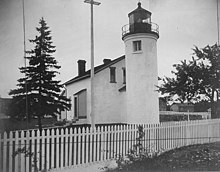
Michigan Islands: Lake Huron - Mackinac Island


 The most famous of Islands in Michigan

Mackinac Island


 A historic event in medical discovery:

Alexis St. Martin

From Wikipedia, the free encyclopedia


Alexis St. Martin, age 67[1]
Alexis St. Martin (April 18, 1802[2] – June 24, 1880) was a Canadian voyageur who is known for his part in experiments on digestion in humans, conducted by the American Army physician William Beaumont between 1822 and 1833.

Work with Beaumont

From Beaumont's Experiments and Observations on the Gastric Juice and the Physiology of Digestion, 1833 (p. 27)
On June 6, 1822 Alexis St. Martin, at the fur trading post on Mackinac Island, was accidentally shot with a musket at close range. The charge of the musket shot left a hole through his side that healed to form a fistula aperture into his stomach.[3][4]
William Beaumont, a US Army surgeon stationed at a nearby army post, treated the wound. Although St. Martin was a healthy 20-year-old, he was not expected to recover due to the severity of his wound. Beaumont explains in a later paper that the shot blew off fragments of St. Martin's muscles and broke a few of his ribs. After bleeding him and giving him a cathartic, Beaumont marked St. Martin's progress. For the next 17 days, all food he ate re-emerged from his new gastric fistula. Finally after 17 days, the food began to stay in St. Martin's stomach and his bowels began to return to their natural functions. When the wound healed itself, the edge of the hole in the stomach had attached itself to the edge of the hole in the skin, creating a permanent gastric fistula. There was very little scientific understanding of digestion at the time and Beaumont recognized the opportunity he had in St. Martin - he could literally watch the processes of digestion by dangling food on a string into St. Martin's stomach, then later pulling it out to observe to what extent it had been digested. Beaumont continued to experiment on St. Martin off and on until 1833.
Alexis St. Martin allowed the experiments to be conducted, not as an act to repay Beaumont for keeping him alive, but rather because Beaumont had the illiterate St. Martin sign a contract to work as a servant. Beaumont recalls the chores St. Martin did: "During this time, in the intervals of experimenting, he performed all the duties of a common servant, chopping wood, carrying burthens, etc. with little or no suffering or inconvenience from his wound." Although these chores were not bothersome, some of the experiments were painful to St. Martin, for example when Beaumont had placed sacks of food in the stomach, Beaumont noted: “the boy complained of some pain and uneasiness at the breast.” Other symptoms St. Martin felt during experiments were a sense of weight and distress at the scrobiculus cordis and slight vertigo and dimness of vision.

After the experiments

Alexis St. Martin, age 81 (2 years after death at 79)[5]
Beaumont published the account of his experiments in 1838 as Experiments and Observations on the Gastric Juice, and the Physiology of Digestion. He and St. Martin parted ways, with Beaumont eventually going to St. Louis, Missouri, and St. Martin to his home in Quebec, Canada. Off and on for the next twenty years, Beaumont tried to get St. Martin to move to St. Louis, but the move never occurred. Beaumont died in 1853 as a result of slipping on ice-covered steps.[6]
When Alexis St. Martin died at St-Thomas de Joliette, Quebec, in 1880 his family delayed his burial until the body began to decompose in order to prevent his “resurrection” by medical men, some of whom wished to perform an autopsy. The eminent physician Sir William Osler took a great interest in retracing the details of this early incident in the history of gastric physiology and published his research in the form of a well-known essay entitled "A Backwoods Physiologist." He also attempted to have the famous stomach placed in Army Medical Museum in Washington, DC.

Media

  • The story of Alexis St. Martin's life as Beaumont's human guinea pig was featured in "To Search for Truth", a 1956 episode of Medic.
  • Beaumont's experiments on St. Martin were featured in a 2012 episode of Radiolab, which aired in on 2 April.[7]

References

  1. Myer, Jesse S. (1912). Life and Letters of Dr. William Beaumont. C. V. Mosby Company (St. Louis). p. 282.
  2. There has been on-going confusion of brothers with the same name. Alexis of this article had an older brother born in 1794 who died in January 1802. Alexis the voyageur was actually born in April, 1802 in Berthierville, Quebec and named for his brother who had died several months before. from Ancestry.com. "Alexis Bidaguin dit St. Martin baptism: Quebec Vital and Church Records (Drouin Collection), 1621-1967: Berthierville: 1802". Retrieved 2009-06-29.
  3.  Beaumont, William (1833). Experiments and Observations on the Gastric Juice and the Physiology of Digestion. Edinburgh: Maclachlan and Stewart.
  4. HarrĂ©, R. (1981). Great Scientific Experiments. Phaidon (Oxford). pp. 39–47. ISBN 0-7148-2096-2.
  5. Myer, Jesse S. (1912). Life and Letters of Dr. William Beaumont. C. V. Mosby Company (St. Louis). p. 298.
  6.  Myer, Jesse S. (1912). Life and Letters of Dr. William Beaumont. C. V. Mosby Company (St. Louis). p. 296.
  7.  http://www.radiolab.org/2012/apr/02/holey-cow/ Radiolab: "Guts: Holey Cow." WNYC, April 2, 2012. Retrieved 2012-09-30.

25 September 2013

Help Other And Learn While Doing It

Have you heard of FREE RICE yet?

Its where you can test your self on many aspects of knowledge.  For every correct answer you are giving away 10 grains of rice.  Answer lots correct give away alot.

Go ahead give some rice away today expand your knowledge.  Have Fun while doing good.


24 September 2013

Genealogy and TV shows


What a wonder it is that Television is bringing us Genealogy/Family History to our homes.

I think it really must be opening 
up family discussions. 
 Most definitely have folks 
questioning more about themselves 
and where they come from.

When you do family history how quickly you come to realize just how often our ancestors moved around. 

Myself both my mom and dad only moved to the town they raised us in.  Neither of them born there.  While I will say that even I did not come from the city I live in. 17 years we have lived in our adopted city.   

So when you can't find that ancestor on the next census in the same town/city you will have to broden your horizons and look else where.  

Genealogy Roadshow on PBS

Way Cool Genealogy Roadshow

You can watch it at on your own time at:


video.pbs.org/video/2365079236/
copy and paste it into your browser watch it and enjoy the stories and myths come to life 
or be put to rest.


It's a such a delight to watch as 
Josh Taylor & Kenyatta Berry  help answer burning questions.  Who knows you might find info. break down a brick wall watching this episode.


19 September 2013

Caerlaverock Castle, Scotland

I found a Lovely Web Site regarding Caerlaverock Castle and its History.

Caerlaverock Castle is perhaps more readily identified with Clan Maxwell than any other historical site. Located just a few miles Southeast of Dumfries, Scotland, Caerlaverock was owned by Maxwells and their descendants from the time when the lands were first acquired by John de Muccuswell early in the 13th century. 
In the later Middle Ages, it was the Maxwell stronghold when the family served as Wardens of the West March.

 Over the years it was besieged five times, changed hands time and again, and was at least once almost totally destroyed. Yet today its ruins tell of its fascinating past and epitomize the medieval stronghold.
The first castle on the site was built around the 1220s, an earthwork fortification surrounded by a moat in the marshes to the south of the present building. That very basic defensive structure was replaced by a substantial castle, built by Sir Herbert de Maxwell around 1277. It was that structure which was besieged by King Edward I in 1300, the castle’s most famous event.
Scottish Castles, Scotland History, Scotland, Castle, Heritage The castle drawbridge and moat
The siege of 1300 became famous mainly through an epic French poem which told:
“Caerlaverock was so strong a castle that it feared no siege before the King came there, for it would never have had to surrender, provided that it was well supplied, when the need arose, with men, engines and provisions.In shape it was like a shield, for it had but three sides round it, with a tower at each corner, but one of them was a double one, so high, so long, and so wide, that the gate was underneath it, well made and strong, with a drawbridge and a sufficiency of other defences. And it had good walls, and good ditches filled right up to the brim with water. And I think you will never see a fore finely situated castle, for on the one side can be seen the Irish Sea, towards the west, and to the north the fair moorland, surrounded by an arm of the sea, so that no creature born can approach it on two sides, without putting himself in danger of the sea. On the south side it is not easy, for there are many places difficult to get through because of woods and marshes and ditches hollowed out by sea where it meets the river.”
The old account of the castle’s construction could just as easily be a description of the present structure. And there are still in the castle some remains of that structure which stood in 1300. But most of the “second” Caerlaverock was destroyed about 1312, when Sir Eustace Maxwell, having declared for Robert Bruce, king of the Scots, was besieged by Edward II’s forces and, in keeping with Bruce’s policy of denying the enemy any stronghold which might be useful to him later, demolished Caerlaverock when forced to abandon it.


When the castle was rebuilt is not known, but history tells that Herbert of Maxwell delivered hostages at the castle after submitting to Edward III in 1347. In return, Maxwell received letters of protection for himself, his men, and the castle.

Scottish Castles, Scotland History, Scotland, Castle, Heritage
In 1355 or 1356, Roger Kirkpatrick brought all of Nithsdale under the Scottish Crown once more. He captured Caerlaverock and, according to a chronicle of the time, reduced it to the ground; however, the same chronicle contains an entry from the following year saying that the same Roger was killed “at the castle of Caerlaverock. So it is hard to tell specifically when the structure was again destroyed, but signs of a partial destruction are still evident in today’s structure.
Evidence suggests that the next rebuilding of the castle started about 1370. Other additions and changes were made through the years, such as the completion of the bartizan of Caerlaverock by Robert, second Lord Maxwell, who succeeded his father Herbert, the first Lord, in 1452 and lived until 1488.
While the mid-1400s saw the construction of manor houses by the Lords in England, the relative insecurity of the Scottish countryside led to construction of tower houses by the Scottish Lords. The gatehouse at Caerlaverock served this purpose, with a great chamber on the first floor and rooms on the second floor and in the towers.
By the mid-15th century, other buildings rose in the courtyard containing fireplaces and windows. These provided accommodations for guest, while Lord Maxwell’s rooms were closer to the entrance where, when needed, he could command the castle’s defense.
In the turbulent 16th century, the castle changed hands several times between the English and the Scots. Although James V was a guest at the castle in 1542, Caerlaverock was surrendered by negotiation to Henry VIII three years later. It was later besieged and recovered by the Scots, only to be taken in 1570 by the English under the Earl of Sussex who “threw down” the castle. That damage must have been relatively slight, however, because Lord Maxwell was recorded as making “great fortifications” in 1593, having “many men working at his house.”
The 17th century saw even more construction at the castle, with Robert Maxwell, first Earl of Nithsdale, erecting buildings designed for comfort rather than for military fortification. The “Nithsdale Apartments,” as they are now known, are dated by the inscription of “1634” on a window-head of the Renaissance style buildings which are embellished with much fine detail. This was to be the Maxwells’ fine house, but it was not to be enjoyed very long.
Scottish Castles, Scotland History, Scotland, Castle, Heritage 
 Nithsdale apartments inside Caerlaverock Castle


When the truce broke down between King Charles I and the Covenanters in 1640, the king warned the Earl of Nithsdale, who was one of the king’s staunch supporters, to “look to himself.” Accordingly, the Earl gathered 200 soldiers in the castle and withstood a siege for 13 weeks before finally, with the king’s permission, capitulating.
It was following that loss that Caerlaverock was partially destroyed with the intent of rendering it unfit either as a fortress or a residence. The castle has remained a ruin ever since, passing by inheritance through the family of Herries to the dukes of Norfolk. The 16th Duke of Norfolk placed it in the hands of the state in 1946, and it is operated today by Historic Scotland, a government agency which maintains many of Scotland’s historic properties.
Scottish Castles, Scotland History, Scotland, Castle, Heritage Archeological dig ongoing at Caerlaverock
For updated information on the Archeological Dig at Caerlaverock, point your browser to: www.suat.demon.co.uk/caerlaverock
For operating hours and directions to Caerlaverock, contact Historic Scotland at: www.historic-scotland.gov.uk


28 August 2013

Genealogy Quotes #4


"Why waste your money looking 
up your family tree?
Just go into politics, and your opponents 
will do it for you."

-Mark Twain-

27 August 2013

Michigan Islands #2

Have you ever been to any of these islands? 
Do you have ancestors who lived on any of these Islands?

South Manitou Island

South Manitou Island, Michigan, MI, Michigan Islands, Family history, genealogy, family fun, trips to michigan


South Manitou Island, Michigan, MI, Michigan Islands, Family history, genealogy, family fun, trips to michigan

All photos found on google images


North Manitou Island


North Manitou Island, Michigan, MI, Michigan Islands, Family history, genealogy, family fun, trips to michigan
found on Wikipedia

North Manitou Island, Michigan, MI, Michigan Islands, Family history, genealogy, family fun, trips to michigan


26 August 2013

Lake Michigan Islands


The islands in the Beaver Island archipelago include, in rough order of size:


Washington Island part of Wisconsin


Genealogy Quotes series #3

“These stories will probably be like a large ball of string: made up of many small strings too short to use and too long to throw away.”  

-Vera Mae Slone-

25 August 2013

Genealogy Quotes series#2

"In all of us there is a hunger, marrow-deep, to know our heritage - to know who we are and where we have come from. Without this enriching knowledge, there is a hollow yearning. No matter what our attainments in life, there is still a vacuum, an emptiness and the most disquieting loneliness."
-- Alex Haley

Genealogy Quotes series

"She calls to me from long ago; through sunlit skies; through drifts of snow. In clouds that dance upon the sea, I call to her, and she to me. 

So real was she. She laughed; she cried. She loved; she lost. She lived; she died. She hoped and dreamed; so real was she. She lived a life that I may be. 

The blood through which my veins does flow is the same as her's from long ago. So it will be that when I'm gone in an unborn child it will flow on. 

I'll live my life and when it's done I'll live again in those to come. For I'm a bridge from she to me; from those that were, to those to be."

-- Darlene Caryl-Stevens

18 August 2013

46 Chromosomes Thats what each of us are made from!

When Sperm penetrates the egg we have begun.  What we look like its all in the genes.  
Tall, short, dark, fair, pear, board or apple shaped.
Smaller odds then the roll of the dice.  

23 Chromosomes From Mom-Through Oogensis: 
 Science, Egg and Sperm, oogenesis, baby making, offspring 46 to 23 chromosones, Science


23 Chromosomes From Dad-Through Spermatogenesis:
Science, Egg and Sperm, Spermatogenesis, baby making, offspring 46 to 23 chromosones, Science


Its amazing that what we get.  


Fertilation Science, Science, Egg and Sperm, Human baby, baby made, Baby will come from union


So the Sperm brings its own individual 23 chromos. with it to the egg. The egg has 23 chromos of its own.

No 2 sperm carries different 23 chromos  as another sperm.  Same goes for the Egg each egg has a different lineup of 23 chromosomes.

Thats why we can all look so different then our siblings  then maybe all look so much alike.
Related Posts Plugin for WordPress, Blogger...