DuCap Sylvestre Family History Blog is all about the Ancient family history to the more current Ancestors. A Family History whose Blood Lines reach back across the Globe. DNA in hand.
31 December 2017
20 August 2016
Sweetness in Letters
Labels:
Baby Cards,
Congradulations,
Letters,
New Baby,
Sisters Love
08 August 2016
07 August 2016
TREATY OF LONDON: BELGIAN WIN Belgian Long road of seperation
United Kingdom of the Netherlands
Treaty of London of 1839 signed 19 April 1839
also called: the Treaty of the XXIV articles,or the Quintuple Treaty of 1839, or the First Treaty of London, the Convention of 1839, or the Treaty of Separation, .
Many names for all the same event.
What the treaty did for Belgium was it guaranteed the Independence and Neutrality from all the other European powers. While establishing independence of the German speaking portion of Luxembourg.
24 July 2016
Prosper Tessier Catherine de Koning Family Photo circa 1896 Bay City /Essexville, MI area.
![]() |
| Photo found on Ancestry.com Originally posted on tree was by:
JeanMarieOswald
originally shared this on
26 May 2013
|
Prospere & Catherine Tacey Family
1896
This
photo would have been taken in about 1896. August, the baby in the
photo, was born on June 6, 1895, and he appears to be at least 6 months
to about one year old. August had quite an interesting life. He became a
professional wrestler, had at least five wives, and died in Florida in
1987 at the age of 92
. The maiden name that I have for the mother
Catherine is "deKoning" which is the original Dutch spelling. When she
came ....., her name was spelled as "King".
The name "Ducharme" was
the maiden name of Prosper's mother Henriette (Ducharme)
Tessier/Tacey.(Tom Piorkowski) (Tacey & Tessier FB group collection)
Labels:
1896,
Catherine de Koning,
Family Photo,
Prosper Tessier,
Tacey,
Tessier
Belgium Ancestors History of being Conqured and Unconqured
Belgium
A conquered land over and over again.
Wikipedia Information for:
History of Belgium
— Julius Caesar, De Bello Gallico, Book I, Ch. 1
The name 'Belgium' is derived from Gallia Belgica, a Roman province in the northernmost part of Gaul that before Roman invasion in 100 BC, was inhabited by the Belgae, a mix of Celtic and Germanic peoples.[18][19] A gradual immigration by Germanic Frankish tribes during the 5th century brought the area under the rule of the Merovingian kings. A gradual shift of power during the 8th century led the kingdom of the Franks to evolve into the Carolingian Empire.[20]
The Treaty of Verdun in 843 divided the region into Middle and West Francia and therefore into a set of more or less independent fiefdoms which, during the Middle Ages, were vassals either of the King of France or of the Holy Roman Emperor.[20]
Many of these fiefdoms were united in the Burgundian Netherlands of the 14th and 15th centuries.[21] Emperor Charles V extended the personal union of the Seventeen Provinces in the 1540s, making it far more than a personal union by the Pragmatic Sanction of 1549 and increased his influence over the Prince-Bishopric of Liège.[22]
The Eighty Years' War (1568–1648) divided the Low Countries into the northern United Provinces (Belgica Foederata in Latin, the "Federated Netherlands") and the Southern Netherlands (Belgica Regia, the "Royal Netherlands"). The latter were ruled successively by the Spanish (Spanish Netherlands) and the Austrian Habsburgs (Austrian Netherlands) and comprised most of modern Belgium. This was the theatre of most Franco-Spanish and Franco-Austrian wars during the 17th and 18th centuries.
Following the campaigns of 1794 in the French Revolutionary Wars, the Low Countries—including territories that were never nominally under Habsburg rule, such as the Prince-Bishopric of Liège—were annexed by the French First Republic, ending Austrian rule in the region. The reunification of the Low Countries as the United Kingdom of the Netherlands occurred at the dissolution of the First French Empire in 1815, after the defeat of Napoleon.
In 1830, the Belgian Revolution
led to the separation of the Southern Provinces from the Netherlands
and to the establishment of a Catholic and bourgeois, officially
French-speaking and neutral, independent Belgium under a provisional government and a national congress.[23][24] Since the installation of Leopold I as king on 21 July 1831, now celebrated as Belgium's National Day, Belgium has been a constitutional monarchy and parliamentary democracy, with a laicist constitution based on the Napoleonic code.[25] Although the franchise was initially restricted, universal suffrage for men was introduced after the general strike of 1893 (with plural voting until 1919) and for women in 1949.
The main political parties of the 19th century were the Catholic Party and the Liberal Party, with the Belgian Labour Party emerging towards the end of the 19th century. French was originally the single official language adopted by the nobility and the bourgeoisie. It progressively lost its overall importance as Dutch became recognized as well. This recognition became official in 1898 and in 1967 the parliament accepted a Dutch version of the Constitution.[26]
The Berlin Conference of 1885 ceded control of the Congo Free State to King Leopold II as his private possession. From around 1900 there was growing international concern for the extreme and savage treatment of the Congolese population (millions of whom are thought to have died) under Leopold II, for whom the Congo was primarily a source of revenue from ivory and rubber production.[27] Many Congolese were killed by Leopold's agents for failing to meet production quotas for ivory and rubber.[28] It is estimated that nearly 10 million were killed during the Leopold period. In 1908 this outcry led the Belgian state to assume responsibility for the government of the colony, henceforth called the Belgian Congo.[29] A Belgian commission in 1919 estimated that Congo's population was half what it was in 1879. [30]
Germany invaded Belgium in August 1914 as part of the Schlieffen Plan to attack France and much of the Western Front fighting of World War I occurred in western parts of the country. The opening months of the war were known as the Rape of Belgium due to German excesses. Belgium assumed control of the German colonies of Ruanda-Urundi (modern-day Rwanda and Burundi) during the war, and in 1924 the League of Nations mandated them to Belgium. In the aftermath of the First World War, the Prussian districts of Eupen and Malmedy were annexed by Belgium in 1925, thereby causing the presence of a German-speaking minority.
German forces again invaded the country in May 1940 and 40,690 Belgians, over half of them Jews, were killed during the subsequent occupation and The Holocaust. From September 1944 to February 1945 Belgium was liberated by the Allies. After World War II, a general strike forced King Leopold III, who many Belgians felt had collaborated with Germany during the war, to abdicate in 1951.[31] The Belgian Congo gained independence in 1960 during the Congo Crisis;[32] Ruanda-Urundi followed with its independence two years later. Belgium joined NATO as a founding member and formed the Benelux group of nations with the Netherlands and Luxembourg.
Belgium became one of the six founding members of the European Coal and Steel Community in 1951 and of the European Atomic Energy Community and European Economic Community, established in 1957. The latter has now become the European Union, for which Belgium hosts major administrations and institutions, including the European Commission, the Council of the European Union and the extraordinary and committee sessions of the European Parliament.
A conquered land over and over again.
Wikipedia Information for:
History of Belgium
Gaul is divided into three parts, one of which the Belgae inhabit,
the Aquitani another, those who in their own language are called Celts,
in ours Gauls, the third.
...Of all these, the Belgae are the strongest.
“
”
The Treaty of Verdun in 843 divided the region into Middle and West Francia and therefore into a set of more or less independent fiefdoms which, during the Middle Ages, were vassals either of the King of France or of the Holy Roman Emperor.[20]
Many of these fiefdoms were united in the Burgundian Netherlands of the 14th and 15th centuries.[21] Emperor Charles V extended the personal union of the Seventeen Provinces in the 1540s, making it far more than a personal union by the Pragmatic Sanction of 1549 and increased his influence over the Prince-Bishopric of Liège.[22]
The Eighty Years' War (1568–1648) divided the Low Countries into the northern United Provinces (Belgica Foederata in Latin, the "Federated Netherlands") and the Southern Netherlands (Belgica Regia, the "Royal Netherlands"). The latter were ruled successively by the Spanish (Spanish Netherlands) and the Austrian Habsburgs (Austrian Netherlands) and comprised most of modern Belgium. This was the theatre of most Franco-Spanish and Franco-Austrian wars during the 17th and 18th centuries.
Following the campaigns of 1794 in the French Revolutionary Wars, the Low Countries—including territories that were never nominally under Habsburg rule, such as the Prince-Bishopric of Liège—were annexed by the French First Republic, ending Austrian rule in the region. The reunification of the Low Countries as the United Kingdom of the Netherlands occurred at the dissolution of the First French Empire in 1815, after the defeat of Napoleon.
Episode of the Belgian Revolution of 1830 (1834), by Egide Charles Gustave Wappers
The main political parties of the 19th century were the Catholic Party and the Liberal Party, with the Belgian Labour Party emerging towards the end of the 19th century. French was originally the single official language adopted by the nobility and the bourgeoisie. It progressively lost its overall importance as Dutch became recognized as well. This recognition became official in 1898 and in 1967 the parliament accepted a Dutch version of the Constitution.[26]
The Berlin Conference of 1885 ceded control of the Congo Free State to King Leopold II as his private possession. From around 1900 there was growing international concern for the extreme and savage treatment of the Congolese population (millions of whom are thought to have died) under Leopold II, for whom the Congo was primarily a source of revenue from ivory and rubber production.[27] Many Congolese were killed by Leopold's agents for failing to meet production quotas for ivory and rubber.[28] It is estimated that nearly 10 million were killed during the Leopold period. In 1908 this outcry led the Belgian state to assume responsibility for the government of the colony, henceforth called the Belgian Congo.[29] A Belgian commission in 1919 estimated that Congo's population was half what it was in 1879. [30]
Germany invaded Belgium in August 1914 as part of the Schlieffen Plan to attack France and much of the Western Front fighting of World War I occurred in western parts of the country. The opening months of the war were known as the Rape of Belgium due to German excesses. Belgium assumed control of the German colonies of Ruanda-Urundi (modern-day Rwanda and Burundi) during the war, and in 1924 the League of Nations mandated them to Belgium. In the aftermath of the First World War, the Prussian districts of Eupen and Malmedy were annexed by Belgium in 1925, thereby causing the presence of a German-speaking minority.
German forces again invaded the country in May 1940 and 40,690 Belgians, over half of them Jews, were killed during the subsequent occupation and The Holocaust. From September 1944 to February 1945 Belgium was liberated by the Allies. After World War II, a general strike forced King Leopold III, who many Belgians felt had collaborated with Germany during the war, to abdicate in 1951.[31] The Belgian Congo gained independence in 1960 during the Congo Crisis;[32] Ruanda-Urundi followed with its independence two years later. Belgium joined NATO as a founding member and formed the Benelux group of nations with the Netherlands and Luxembourg.
Belgium became one of the six founding members of the European Coal and Steel Community in 1951 and of the European Atomic Energy Community and European Economic Community, established in 1957. The latter has now become the European Union, for which Belgium hosts major administrations and institutions, including the European Commission, the Council of the European Union and the extraordinary and committee sessions of the European Parliament.
Labels:
Ancestoral Land,
Ancestors,
Belgium,
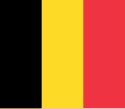
Belgium Flag,
Family Tree
22 July 2016
Belgian isn't only about Chocolate check out some of the ancestors names: Belgian Dutch Names to Perk you Up and make you Think!
First Names:
Lieven
Ludovicus
Petronilla
Aloysius (Allo-wishes)
Leoander
Prosper
Pieternelle
Ludovica
Roel
Lien
Pomme (Apple in english) Mbonigaba
Liloe Umuhoz
Sauman
Blanka
Lutgar
Geert
Ignace
Jeroom Germaan
Mauritius
Drogo
Last Names:
Gyssels
Van de Catseye
Callewaert
Pysson
Platevoet
Verslype
Tryhou
Van Meerbeeck
Goormachtigh
Govaert
Van Steenkiste
Van Meersch
Pauwelyn
Seys,
Wackenier
De Smedt
28 June 2016
Who Does What Best?
Genealogist/Family Historian ASK THE Questions the rest of the Family is shy to to ask about.
Now the Question been asked and They all want in on it if its good. Other wise just keep the lid on it don't talk about it. Who Knew???
Labels:
Family Fact,
family fun,
Family History,
Family Secrets
13 June 2016
Irish Genealogy serachabel records
Can YOU Help ME? Found a family tree hoping to break down my Speghe/Spiegell Brick wall.
Found this Tree, however before I can include it in my tree I need to vette it. Meaning I need support for it. What do I mean by support?
Documentation of course. What kinds, you ask? Birth records, Baptismal-or similar records, school record, government record, as well Marriage records.
If you see flaws with this tree, please point them out. Then I will work to resolve them.
This tree is of the Speghel family. That arrived in Bay City, Essex, Michigan
The Tree is of a Belgian Family.
18 March 2016
MISTAKE Don't want that in your TREE!!!
Ways to Make sure your Tree stands up to Vetting.
Go over each Individual Ancestor make certain of the sources for them. (Review the source post).
No source, then find the info again. See how you found it. Make sure it not a "I found it on the internet source". Get to the source of the information. It may take work, work it, work it.
Go over every source.
Is it really a source? Or just a story? Get the real source, do interviews if you have to find the answer. Find it out, get the documents that matter.
Who will Vett your Tree any relative that has also done work, or a realative that knows the true story and the true source for it.
It may be that relative you don't want involved in your tree/genealogy. They just might have the best information to help you. Tap into them.
03 December 2015
Cemetery Treasures
Information contained in a cemetery
![]() |
| Photo posted by Julie on FIND A GRAVE 6/05/2008 on Charles Carroll Memorial |
Where, Who, When
Where: Cemeteries have information just waiting for you. You say where is the cemetery? They say in the town they lived in, where the family had a plot, or even, where the spouse was from. Is where they could be buried. Unless there was a tragedy elsewhere. Then that changes the whole story.
Who: So now you used the death certificate to see where they are buried. You are able to make it in person or get a photo of all sides of the headstone. Dates check out as far as you know. But wait,.........wait,................wait who is this other person listed at the grave ??? Can it be a child you never knew about? Can it be a spouse you never knew about? What, they are buried with the IN-LAW???
When: Some folks get moved in their burial history, they were buried one place - well yea the one listed on the Death Cert. A new burial will not be listed on the original document. I have not experienced this, so your really going to have to ask questions to a lot more folks then you might want to. Just keep plugging along, the answer will be made self clear. Keep turning over those big genealogy boulders with it's secrets underneath. There can be amazing information contained on headstones that can be the best help you have ever received. A while back Harvard Proffesor Henry Louis Gates Jr. helped Barbara Walters in her genealogy search. In fact she had paid a genealogist to help her. When Henry and his team went to work they followed the clues. From one spot to the next in which led to the Head Stone the information was priceless written right there the whole time. When they say exhaustive search to be done. Yep your exhausted, mentally and possibly, when its done.
Help In Finding The Elusive Ones
Do you know yet about FIND A GRAVE and A BILLION GRAVES web sites. Both of these sites are free to use. Ancestry has Find A Grave linked into the hint system. But just because you don't get a hint to a Find A Grave memorial does not mean that one exist. Do you know you too can add a memorial that just might bring you family history you can't get anywhere else. That's what happened to me. I put up a Memorial for my Great Grandmother Katherine Kelly, Dotch, Putman. A cousin contacted me through Find A Grave. He was the piece I needed to put together Katherine and her Dad. As I was able to provide him with missing pieces as well.Best of luck looking for your Ancestors
22 October 2015
Ship Wreck in Lake Ontario: Ship name is BAY STATE. Was out of Oswego New York and headed for Ohio.
Lake Ontario Steamship BAY STATE wreckage discovered by Treasure Hunters
Labels:
Baystate,
Lake Ontario,
Shipwreck,
Steamship,
Treasure Hunters,
Wreackage
06 September 2015
Genealogical Sandbox
Family Search has a beta site that can help in many ways with your research.
Then the Genealogical Sandbox, also another source, has on-going projects.
Some of them include:
Record Search
Family Tree
Standard Finder
Research WIKI
Family Search Alpha
Life Browser Prototype
Pedigree Viewer
Each of these projects have a specific purpose.
https://familysearch.org/learn/wiki/en/User:AdkinsWH/Sandbox:_Historical_and_Genealogical_Societies
Happy Hunting
Which is FamilySearch Labs
Use it you might be really happy with what you find out.
Then the Genealogical Sandbox, also another source, has on-going projects.
Some of them include:
Record Search
Family Tree
Standard Finder
Research WIKI
Family Search Alpha
Life Browser Prototype
Pedigree Viewer
Each of these projects have a specific purpose.
https://familysearch.org/learn/wiki/en/User:AdkinsWH/Sandbox:_Historical_and_Genealogical_Societies
Happy Hunting
Connect Generations
Discover your place in history with Family Tree, an easy way to preserve your genealogy online. See what others have contributed, and share your family story.
Get startedMake Discoveries
Search for your ancestors in millions of historical records. You can also search in the catalog, books, genealogies, and the Wiki.
Search historical recordsMy Family: Stories That Bring Us Together
Continue your family history journey by transferring your family information from this booklet to the online Family Tree.
Learn more
We Are All Pioneers
Discover modern pioneers, and share your st
Subscribe to:
Posts (Atom)