Showing posts with label Family Fact. Show all posts
Showing posts with label Family Fact. Show all posts
28 June 2016


28 January 2015
Wait A Minute
Copying information directly from Ancestry.com is Guess What? It is not *vetted information. Meaning that you must still do the leg work before you accept the hints etc... as a fact.
You need sources to prove your fact.
 |
| http://www.genealogyintime.com/records/newest-genealogy-records.html ...found n that site |
What makes a "Fact" in genealogy. A Fact is a piece of information that you have found at least 3 documents. Yes I said 3 documents.
What is a Source Document in genealogy: Birth record, Baptismal record, Confirmation record, a religious event in which their parents gave the information, School records, a Marriage record. Those are source Documents.
 |
| Document found at :https://familysearch.org/ |
To make the work you do more valuable get your sources, get those documents, at least know where to send others to get the documents too.
All other kinds of documents can only help you with finding where to get the source docement.
19 November 2012
Traditional Thanksgiving
Family Time
Who do you have over on Thanksgiving? Where are you invited to? Where do you go if you have more then one invatation?
Many questions this seasons gives us. How to you choose? Is it easy to choose?
How about the extra people you would like to include. When do you ask to have them added to the guest list. Are you frazzled if someone comes you were not expecting if your the one hosting the dinner?
Good Luck
16 November 2012
Family Ties That Bind Us
Think on those words. The ties that bind us.

Of course they are not visible these ties.
Some of my experiences with these family ties have been happy sad & exhausting. I have always know no matter where I was in life that there are those bound to me. By family ties & blood.
Than I think of the Chinese girls who would have their feet bound when they were quite young. So they could never really walk on their own. We in the western culture that can be most disturbing.

Can you look at it like this? That with bound feet this girl from now on must rely upon someone else to do some very basis things for her. Before she had this done she most likely did not need to much help. Now with her feet bound so to is her family much more bound to her?
The co-dependance in family is strongly illustrated in the Chinese feet binding tradition. To be tied to our families is a very good thing.

When you join with your family & friends this Thanksgiving think about how you are bound to them. Think of your ties to them. Then maybe see how you can strengthen them and encourage better family relation.
Of course they are not visible these ties.
Some of my experiences with these family ties have been happy sad & exhausting. I have always know no matter where I was in life that there are those bound to me. By family ties & blood.
Than I think of the Chinese girls who would have their feet bound when they were quite young. So they could never really walk on their own. We in the western culture that can be most disturbing.
Can you look at it like this? That with bound feet this girl from now on must rely upon someone else to do some very basis things for her. Before she had this done she most likely did not need to much help. Now with her feet bound so to is her family much more bound to her?
The co-dependance in family is strongly illustrated in the Chinese feet binding tradition. To be tied to our families is a very good thing.
When you join with your family & friends this Thanksgiving think about how you are bound to them. Think of your ties to them. Then maybe see how you can strengthen them and encourage better family relation.
12 November 2012
Impact of "Ring Around The Rosie" on your Ancestors

What physicians wore when visiting the Plaque Victims.
It was believed that the disease was airborne. So the long beak facial mask was stuffed with herbs to protect the doctor.
The nursery rhyme has a Dark Origin.
The Black Plaque was the cause of it.
The Rhyme dates only back to 1665 with Londons Great Plaque.
What do you know of the Bubonic Plaque?
The Bubonic Plaque has a very Ancient history.
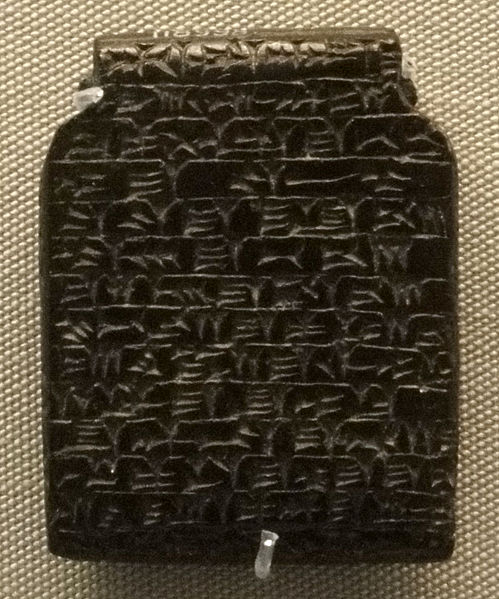 Amulet picture from Wikipedia Amulet (800 BC – 612 BC) to ward off plague inscribed with a quotation from theAkkadian Erra Epic
from Wikipedia:
Antiquity

The earliest account describing a possible plague epidemic is found in I Samuel 5:6 of the Hebrew Bible (Tanakh). In this account, thePhilistines of Ashdod were stricken with a plague for the crime of stealing the Ark of the Covenant from the Children of Israel. These events have been dated to approximately the second half of the 11th century BC.[citation needed] The word "tumors" is used in mostEnglish translations to describe the sores that came upon the Philistines. The Hebrew, however, can be interpreted as "swelling in the secret parts".[citation needed] The account indicates that the Philistine city and its political territory were stricken with a "ravaging of mice" and a plague, bringing death to a large segment of the population.
In the second year of the Peloponnesian War (430 BC), Thucydides described an epidemic disease which was said to have begun inEthiopia, passed through Egypt and Libya, then come to the Greek world. In the Plague of Athens, the city lost possibly one third of its population, including Pericles. Modern historians disagree on whether the plague was a critical factor in the loss of the war. Although this epidemic has long been considered an outbreak of plague, many modern scholars believe that typhus,[13] smallpox, or measles may better fit the surviving descriptions. A recent study of DNA found in the dental pulp of plague victims suggests that typhoid was actually responsible.[14]
In the first century AD, Rufus of Ephesus, a Greek anatomist, refers to an outbreak of plague in Libya, Egypt, and Syria. He records that Alexandrian doctors named Dioscorides and Posidonius described symptoms including acute fever, pain, agitation, and delirium. Buboes—large, hard, and non-suppurating—developed behind the knees, around the elbows, and "in the usual places." The death toll of those infected was very high. Rufus also wrote that similar buboes were reported by a Dionysius Curtus, who may have practiced medicine inAlexandria in the third century BC. If this is correct, the eastern Mediterranean world may have been familiar with bubonic plague at that early date.[15][16]
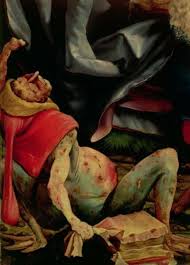
[edit]Medieval and post-medieval pandemics
Local outbreaks of the plague are grouped into three plague pandemics, whereby the respective start and end dates and the assignment of some outbreaks to either pandemic are still subject to discussion.[17] According to Joseph P. Byrne from Belmont University, the pandemics were:
- the first plague pandemic from 541 to ~750, spreading from Egypt to the Mediterranean (starting with the Plague of Justinian) and northwestern Europe[18]
- the second plague pandemic from ~1345 to ~1840, spreading from Central Asia to the Mediterranean and Europe (starting with theBlack Death), and probably also to China[18]
- the third plague pandemic from 1866 to the 1960s, spreading from China to various places around the world, notably the US-American west coast and India.[19]
- However, the late medieval Black Death is sometimes seen not as the start of the second, but as the end of the first pandemic – in that case, the second pandemic's start would be 1361; also vary the end dates of the second pandemic given in literature, e.g. ~1890 instead of ~1840.[17]
[edit]First Pandemic: Early Middle Ages (Plague of Justinian)
Main article: Plague of JustinianThe Plague of Justinian in AD 541–542 is the first known attack on record, and marks the first firmly recorded pattern of bubonic plague. This disease is thought to have originated in China.[20] It then spread to Africa from where the huge city of Constantinople imported massive amounts of grain, mostly from Egypt, to feed its citizens. The grain ships were the source of contagion for the city, with massive public granaries nurturing the rat and flea population. At its peak the plague was killing 10,000 people in Constantinople every day and ultimately destroyed perhaps 40% of the city's inhabitants. It went on to destroy up to a quarter of the human population of the eastern Mediterranean.In AD 588 a second major wave of plague spread through the Mediterranean into what is now France. It is estimated that the Plague of Justinian killed as many as 100 millionpeople across the world.[21][22] It caused Europe's population to drop by around 50% between 541 and 700.[23] It also may have contributed to the success of the Arab conquests.[24][25] An outbreak of it in the AD 560s was described in AD 790 as causing "swellings in the glands ... in the manner of a nut or date" in the groin "and in other rather delicate places followed by an unbearable fever". While the swellings in this description have been identified by some as buboes, there is some contention as to whether the pandemic should be attributed to the bubonic plague, Yersinia pestis, known in modern times.[26][edit]Second Pandemic: from 14th century (Black Death) to 19th century
See also: Black DeathFrom 1347 to 1351, the Black Death, a massive and deadly pandemic originating in China, spread along the Silk Road and swept through Asia, Europe and Africa.[20] It may have reduced the world's population from 450 million to between 350 and 375 million.[27] Chinalost around half of its population, from around 123 million to around 65 million; Europearound 1/3 of its population, from about 75 million to about 50 million; and Africaapproximately 1/8 of its population, from around 80 million to 70 million (mortality rates tended to be correlated with population density so Africa, being less dense overall, had the lowest death rate). This makes the Black Death the largest death toll from any known non-viral epidemic. Although accurate statistical data does not exist, it is thought that 1.4 million died in England (1/3 of England's 4.2 million people), while an even higher percentage of Italy's population was likely wiped out. On the other hand, Northeastern Germany, Bohemia, Poland and Hungary are believed to have suffered less, and there are no estimates available for Russia or the Balkans. It is conceivable that Russia may not have been as affected due to its very cold climate and large size, hence often less close contact with the contagion.
The plague repeatedly returned to haunt Europe and the Mediterranean throughout the 14th to 17th centuries.[28] According to Biraben, plague was pre1485; 1500–1503; 1518–1531; 1544–1548; 1563–1566; 1573–1588; 1596–1599; 1602–1611; 1623–1640; 1644–1654; and 1664–1667; subsequent outbreaks, though severe, marked the retreat from most of Europe (18th century) and northern Africa (19th century).[30] According to Geoffrey Parker, "France alone lost almost a million people to plague in the epidemic of 1628–31."[31]In England, in the absence of census figures, historians propose a range of preincident population figures from as high as 7 million to as low as 4 million in 1300,[32] and a postincident population figure as low as 2 million.[33] By the end of 1350, the Black Death subsided, but it never really died out in England. Over the next few hundred years, further outbreaks occurred in 1361–62, 1369, 1379–83, 1389–93, and throughout the first half of the 15th century.[34] An outbreak in 1471 took as much as 10–15% of the population, while the death rate of the plague of 1479–80 could have been as high as 20%.[35] The most general outbreaks in Tudor and Stuart England seem to have begun in 1498, 1535, 1543, 1563, 1589, 1603, 1625, and 1636, and ended with the Great Plague of London in 1665.[36]In 1466, perhaps 40,000 people died of plague in Paris.[37] During the 16th and 17th centuries, plague visited Paris for almost one year out of three.[38] The Black Death ravaged Europe for three years before it continued on into Russia, where the disease hit somewhere once every five or six years from 1350 to 1490.[39] Plague epidemics ravaged London in 1563, 1593, 1603, 1625, 1636, and 1665,[40]reducing its population by 10 to 30% during those years.[41] Over 10% of Amsterdam's population died in 1623–1625, and again in 1635–1636, 1655, and 1664.[42] There were 22 outbreaks of plague in Venice between 1361 and 1528.[43] The plague of 1576–1577 killed 50,000 in Venice, almost a third of the population.[44] Late outbreaks in central Europe included the Italian Plague of 1629–1631, which is associated with troop movements during the Thirty Years' War, and the Great Plague of Vienna in 1679. Over 60% of Norway's population died from 1348 to 1350.[45] The last plague outbreak ravaged Oslo in 1654.[46]
In the first half of the 17th century, a plague claimed some 1.7 million victims in Italy, or about 14% of the population.[47] In 1656, the plague killed about half of Naples' 300,000 inhabitants.[48] More than 1.25 million deaths resulted from the extreme incidence of plague in 17th-century Spain.[49] The plague of 1649 probably reduced the population of Seville by half.[50] In 1709–1713, a plague epidemic that followed the Great Northern War (1700–1721, Sweden v. Russia and allies)[51] killed about 100,000 in Sweden,[52] and 300,000 in Prussia.[50] The plague killed two-thirds of the inhabitants of Helsinki,[53] and claimed a third of Stockholm's population.[54] Western Europe's last major epidemic occurred in 1720 in Marseilles,[45] in Central Europe the last major outbreaks happened during the plague during the Great Northern War, and in Eastern Europe during the Russian plague of 1770-1772The Black Death ravaged much of the Islamic world.[55] Plague was present in at least one location in the Islamic world virtually every year between 1500 and 1850.[56] Plague repeatedly struck the cities of North Africa. Algiers lost 30,000–50,000 to it in 1620–21, and again in 1654–57, 1665, 1691, and 1740–42.[57] Plague remained a major event in Ottoman society until the second quarter of the 19th century. Between 1701 and 1750, 37 larger and smaller epidemics were recorded in Constantinople, and 31 between 1751 and 1800.[58]Baghdad has suffered severely from visitations of the plague, and sometimes two-thirds of its population has been wiped out.[59][edit]


05 September 2012
Do you have Native American blood in your veins? Are you a Policician that stood up and said yes?
Growing up my father claimed that he had "Indian blood". Which we know we now say "Native American blood". So when I would list out what my heritage was I always included what my father told us. Not what the USA govt said I was.
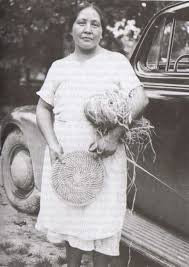 So for me at the time in my life was, my list was: French, French Canadian, French Canadian Indian, Irish, Dutch, Belgian & Native American. To me it was a fact. Then when I began my family history research in earnest I was more of the camp I will disprove that I have Native American Ancestors.

Time went along I could not find the needle
in the haystack of Native American heritage.
It was not disproved or proved.
More years passed on and the Ancestry.com was up & running at my normal pace, along with an amazing amount of records.
Working tru my Dads mother's lines: Which included the Caryls & Babbitts lines. I followed the trail of some of the lines which brought me into Rhode Island.

Rhode Island is a hot bed of ancestors for me. I found out a John Cory 1658-1712 married an Elizabeth Gassett 1661-1713.
As I clicked on Elizabeth profile it said she was a Princess. So I looked at her parents names.
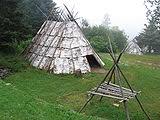 There was not the name of a European King as her father but rather "Narraganset Chief Gasset" as her father.
So it is was now in front of my face. Where I was believing we were not Native American. So I did my own back tracking.
I find it is correct. Conclusion Yes I am/still not sure descended from Native Americans.
I am a 12 Great Grandchild of the Narragansett Chief & wife. It is because some one else took the time to publish their tree that I was able to clarify my lines.
So as I went on from there and would now comfortable check the box of who I am. Of course I check Native American. Why should I not? Why is only my Northern European heritage worth mentioning? To me WHO DO I THINK I AM is very important. As I think of myself in a new light I have stronger sensitivities as to WHO I AM.
Have you made a discovery to find out you are different then you thought of yourself as?
[I will discuss the French Canadian Indian in another post at a further date, I am in the process of seeking permission].
So when I heard there was a Woman Politician who had checked the Native American box I was like Cool! There are many of us out there who know we are! but, like me was not brought in the Native American ways. Does it make us any less likely to claim it as in Irish heritage. I was not brought in Irish ways either. To me its all the same living here in the USA. We are all a great mix of cultures. One heritage is not more or less important then another. But that we have open conversation about our Heritage. To find joy in our ancestors and to be glad for every ancestor that passed their Genes to us.
A little note: One of my brothers works at a University, when I told him we were Narragansett he said "I never heard of them". I told him I had done a post to my blog in regards to the Narragansett before. I later sent him a page from Wikipedia that discussed the New England Region Native Americans.
HAPPY ANCESTOR HUNTING/FINDING
Time went along I could not find the needle
in the haystack of Native American heritage.
It was not disproved or proved.
More years passed on and the Ancestry.com was up & running at my normal pace, along with an amazing amount of records.
Working tru my Dads mother's lines: Which included the Caryls & Babbitts lines. I followed the trail of some of the lines which brought me into Rhode Island.
Rhode Island is a hot bed of ancestors for me. I found out a John Cory 1658-1712 married an Elizabeth Gassett 1661-1713.
As I clicked on Elizabeth profile it said she was a Princess. So I looked at her parents names.
So it is was now in front of my face. Where I was believing we were not Native American. So I did my own back tracking.
I find it is correct. Conclusion Yes I am/still not sure descended from Native Americans.
I am a 12 Great Grandchild of the Narragansett Chief & wife. It is because some one else took the time to publish their tree that I was able to clarify my lines.
So as I went on from there and would now comfortable check the box of who I am. Of course I check Native American. Why should I not? Why is only my Northern European heritage worth mentioning? To me WHO DO I THINK I AM is very important. As I think of myself in a new light I have stronger sensitivities as to WHO I AM.
Have you made a discovery to find out you are different then you thought of yourself as?
[I will discuss the French Canadian Indian in another post at a further date, I am in the process of seeking permission].
So when I heard there was a Woman Politician who had checked the Native American box I was like Cool! There are many of us out there who know we are! but, like me was not brought in the Native American ways. Does it make us any less likely to claim it as in Irish heritage. I was not brought in Irish ways either. To me its all the same living here in the USA. We are all a great mix of cultures. One heritage is not more or less important then another. But that we have open conversation about our Heritage. To find joy in our ancestors and to be glad for every ancestor that passed their Genes to us.
A little note: One of my brothers works at a University, when I told him we were Narragansett he said "I never heard of them". I told him I had done a post to my blog in regards to the Narragansett before. I later sent him a page from Wikipedia that discussed the New England Region Native Americans.
HAPPY ANCESTOR HUNTING/FINDING
26 June 2012
Tell your Families Story
Have you heard family lore from your Parents, Grandparents, Uncles, Aunts or Cousins ?
 I did. Sometimes it was my desire to know more about what I had heard which led me to research. I really wanted to find out if the information was correct or not.


Everyone has a family history story to tell whats yours? Also in your search have you found names of others involved that you did not hear about? What uniqueness does your family have? Can you find proof? Were you able to share your findings with the one who told the story? Are you happy with what you found?
Get ready share the proved story. Write it up. Sent a letter to others who know about it via what ever way you choose. You can blog about it. Tweet it. Send it to the local newspaper of where it occurred [one easy way to have your family history reach all those possible cousins etc.] they should be happy to add it in their paper.
To me its not a story if its not shared. Hey it might even help break a brick wall down. Share your Story!
Subscribe to:
Posts (Atom)
