HISTORY of Western New York, Niagara Area

Treaty of Big Tree
From Wikipedia, the free encyclopedia to read the treaty:
http://digital.library.okstate.edu/kappler/vol2/treaties/sen1027.htm
Treaty of Big Tree was a formal treaty, held from August 20, 1797, until September 16, 1797, between the Seneca nation and the United States. The delegates for both parties met at the residence of William Wadsworth, an early pioneer of the area and Captain of the local militia, in what is now Geneseo, New York. A meadow between Wadsworth's cabin at Big Tree and the gigantic oak by the river, which gave the place its name, was the site of the conference.
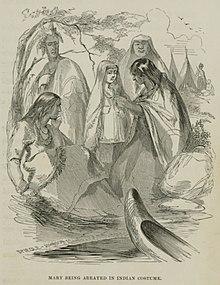
In attendance were nearly three thousand Seneca and other prominent members of the Six Nations of the Iroquois. Representing them were their hoyaneh chiefs:Cornplanter, Red Jacket, Young King, Little Billy, Farmer's Brother, Handsome Lake, Tall Chief, Little Beard and others; the clan mothers of the nation; and *Mary Jemison. Those in attendance representing the United States were: Colonel Jeremiah Wadsworth, Commissioner, assigned by President George Washington to represent the United States government; Captain Charles Williamson and Thomas Morris, representing his father; Robert Morris; General William Shepard, representing Massachusetts; William Bayard, representing New York; Theophilus Cazenove and Paolo Busti, representatives for the Holland Land Company; Captain Israel Chapin, representing the Department of Indian Affairs; Joseph Ellicott, land surveyor; and James Rees as acting secretary. The official interpreters were Horatio Jones and Jasper Parish.
All of the treaty delegates for the United States were housed in William's log cabin and new cobblestone house. A council house was erected by the Seneca and the proceedings were held there. The treaty was signed on September 15, 1797, after nearly a month of, at times heated, back-and-forth negotiations. This treaty is substantial as it opened up the rest of the territory west of the Genesee River for settlement and established ten reservations, perpetual annuities and hunting and fishing rights for the Seneca in Western New York. * After the war, the Seneca were forced to give up their lands to the United States as allies of the defeated British. In 1797 the Seneca sold much of their land at Little Beard's Town to European-American settlers. At that time, during negotiations with the Holland Land Company held at Geneseo, New York, Mary Jemison proved to be an able negotiator for the Seneca tribe. She helped win more favorable terms for giving up their rights to the land at the Treaty of Big Tree (1797)
Treaty of Big Tree
http://en.wikipedia.org/wiki/Phelps_and_Gorham_Purchase
Before Morris could give the Holland Land Company title to this land, however, it was necessary to extinguish the Indian's pre-emptive right to the land.[1] This was achieved at the 1797 Treaty of Big Tree, executed on theGenesee River near modern-day Geneseo, south of Rochester, New York.[1] Representatives of the Holland Land Company, Robert Morris, the Indians, and a commissioner for the United States gathered at Big Tree in August, 1797 and negotiations began.[1] Chiefs and Sachems present included Red Jacket, Cornplanter, Governor Blacksnake, Farmer's Brother and about 50 others. Red Jacket and Cornplanter spoke strongly against selling the land. They held out for "reservations," that is, land which the Indians would keep for their own use.[1] After much discussion, the treaty was signed Sept. 15, 1797. The native Indians were to receive $100,000 (about $1.39 million today) for their rights to about 3.75 million acres (15,000 km²), and they reserved about 200,000 acres (809 km²) for themselves.
In 1798, the New York Legislature, with the assistance of Aaron Burr[4] authorized aliens to hold land directly, and the trustees conveyed the Holland Purchase to the real owners. It was transferred to two sets of proprietors, and one of these sets soon divided into two, making three sets of owners altogether. Each set of proprietors owned their tract as “joint tenants” with right of survivorship, which means as proprietors died off, the surviving proprietors took the deceased's share, and that share did not pass by will or inheritance, except in the case of the last survivor.
. .