Showing posts with label Genealogy. Show all posts

18 August 2024

Lumber Jacks & Loggers " White Pine Era" In Michigan in 1840-1900 Booklet from Rolland H, Maybee

Lumber Jack, White Pine, Pine, Sawmill, Michigan, Michigan Lumber, White Pine King, King, Sap, White Pine Sap, Rolland H. Maybee, Michigan Historical Commision,
MICHIGAN WHITE PINE ERA... White Pine Was King

Milled white pine turned into an excellent working material for building.

Did you have an Ancestor that came to Michigan to work as a LumberJack? 

loggers, Lumber Jack, White Pine, Pine, Sawmill, Michigan, Michigan Lumber, White Pine King, King, Sap, White Pine Sap, Rolland H. Maybee, Michigan Historical Commision,

Michigan Logging Rivers
White Pine Era


Lumber Jack, White Pine, Pine, Sawmill, Michigan, Michigan Lumber, White Pine King, King, Sap, White Pine Sap, Rolland H. Maybee, Michigan Historical Commision, loggers

White Pine the Pine highly sought after for its better quality.  Michigan was full of White Pine.

The rivers used in Michigan logging of White Pine were: Ontonagan, Menominee, Ford, Escanaba, Sturgean, Manistique, Tahquemenon, Chebogan, Black, Thunder, Au Sable, Boardman, Betsie, Manistee, Pine, Little Manistee, Pere Marquette, Muskegon, Molasses, Rifle, Au Gres, White, Tobacco, Chippewa, Tittabawassee, Cass, Saginaw, Bad, Shiawassee, Flint, Lower Black, Flat, Rogue, Grand Rivers.

Lumber Jack, White Pine, Pine, Sawmill, Michigan, Michigan Lumber, White Pine King, King, Sap, White Pine Sap, Rolland H. Maybee, Michigan Historical Commision, loggers


07 October 2022

Spiegel Girls  from Essexville circa 1918

Grandma and Great Aunts

Sugar Beet Farming Family 

4 of  11 children 6 girls 4 boys
 

23 August 2018

365 Days a Year, 
365 Family History-Genealogy Rules 

19.
Do you know who to pass on the genealogy to in your family.  Will it be one of your children grandchild, niece, nephew, or a great one of these.

DUTCH GENEALOGY INFORMATION Found at: http://www.van-diemen-de-jel.nl/Genea/GeneaEN.html

Need Help with your Dutch Roots,  then have a quick read.  It helped me understand alot about how woman used her maiden name and husbands name through her lifetime.


Starting Genealogy in the Netherlands
2017-02-16  P van Diemen

Introduction

This document is not about learning genealogy, but intended for genealogists starting research in the Netherlands.  It explains the administrative system, and what can be found in it.

Registration

In the Netherlands, particular events in a person's live are officially recorded.  The typical events are just what genealogists are looking for:  birth, marriage and death.  The current administrative system is called the Burgerlijke Stand (civil registration, abbreviated ‘BS’).  And there are the Volkstellingen (census) which were held every 10 years, but abandoned in the 1970's.
Before the introduction of the Burgerlijke Stand in 1811 there was a comparable but less extensive system in Church Records.
Note:  In the Dutch system, a woman keeps her maiden name after marriage (certainly in the ‘Burgerlijke Stand’, but it was common before that).  She may use her husbands surname in front of her surname, separated by a hyphen.  E.g. when a Sylvia de Boer married a Klaas Jansen, she may call herself Sylvia Jansen-de Boer.  In every day's life she may be known as Sylvia Jansen, but for any official administration she remains Sylvia de Boer (married to…).
Children will get the surname of the father.  Modern legislation allows more flexibility, in particular for children, but that is of no consequence for genealogists researching the past.
Note:  Dutch surnames often have a preposition ('van', 'van der', 'de', 'ter', …);  such prepositions are part of the surname but not used in alphabetic ordering or in a search.  E.g. you will find 'van Diemen' indicated and sorted as 'Diemen, van'.  For a search you can often specify the prepositions in a special entry called 'tussenvoegsel'.  See Spelling for more on prepositions, spelling and ordering of Dutch names.

Akte:

  The official record of an event is called an Akte (record, deed, certificate).  They were written in books which are now in an archive (Dutch: ‘archief’).  Each municipality has its own archive, but the civil registration sections which are now public are concentrated in the Provincial Archives and the archives of major towns (like Amsterdam and Rotterdam).  People (which includes genealogists ;-) can visit those archives and view the books (commonly via micro fiche).
Note:  that the dates are recorded in 'European' format:  dd-mm-yyyy or dd month year.

Digitisation:

  Genealogy is a very popular hobby in the Netherlands, and many genealogists are doing volunteer work in transcribing old registrations.  Most ‘Akten’ have now been digitised and made accessible via the internet, so you don’t have to travel at all and can research the records from the comfort of your home.  Regarding civil registrations, the Netherlands is one of the most digitised country in the world (with Iceland as first ?).  There are various forms of digitisation:

For the rest please travel right on over to:    http://www.van-diemen-de-jel.nl/Genea/GeneaEN.html

13 June 2016

Can YOU Help ME? Found a family tree hoping to break down my Speghe/Spiegell Brick wall.

Found this Tree, however before I can include it in my tree I need to vette it.  Meaning I need support for it.  What do I mean by support?

Documentation of course.  What kinds, you ask?  Birth records, Baptismal-or similar records, school record, government record, as well Marriage records.

If you see flaws with this tree, please point them out.  Then I will work to resolve them.

This tree is of the Speghel family. That arrived in Bay City, Essex, Michigan 
The Tree is of a Belgian Family.

15 February 2015

Need Help Please. Help Me vett this new Info.

Found this Tree while searching the internet, however before I can include it in my tree I need to vette it.  Meaning I need support for it.  What do I mean by support?

Begium, DeSgeghel, Rycke, Carolus Ludovicus, Jaecques, Pysson, Crombez, Klerken Belgium, married 1820,


Documentation of course.  What kinds, you ask?  Birth records, Baptismal-or similar records, school record, government record, as well Marriage records.


Plus if you see flaws with this tree, please point them out.  Then I will work to resolve them. I must be able to prove this tree. 

Carlos Ludovicus De Speghel, son of Johannes Baptista De Speghel & Anna Theresia Jacques .  He was born in Klerken Belgium

1st married Idonia Coletta de Dycke on 5 Feb 1860 in Klerken Belgium, she is the daughter of Emmanuelle Rycke & Rosalia Seraphina Pysson, b. 4 May 1799 in Klerken Belgium, she died on 29 Nov 1839 in Klerken.

issue of marriage:

  i.Charles Bernard DESPEGHEL was born 25 Aug 1822 in Klerken.
 
  ii.Jan Baptiste DESPEGHEL was born 11 Dec 1823 in Klerken, and died 30 Jan 1824 in Klerken.
 
  iii.Franciscus Bernard DESPEGHEL was born 20 Dec 1824 in Klerken.
 
  iv.David Alexander DESPEGHEL was born 17 Jun 1826 in Klerken, and died 13 Sep 1826 in Klerken.
 
  v.Virginia Sophie DESPEGHEL was born 13 Oct 1827 in Klerken, and died 29 Jan 1839 in Klerken.
 
  vi.Maria Theresa DESPEGHEL was born 27 Oct 1828 in Klerken, and died 17 Jun 1829 in Klerken.
 
  vii.David Alexander DESPEGHEL was born 3 Apr 1830 in Klerken.
 
  viii.Amand Joseph DESPEGHEL was born 10 Sep 1831 in Klerken, and died 20 Dec 1833 in Klerken.
 
  ix.Marie Theresa DESPEGHEL was born Nov 1832 in Klerken, and died 15 May 1834 in Klerken.
 
  x.Leonard Joseph DESPEGHEL was born 6 Oct 1834 in Klerken.
 
  xi.Bruno DESPEGHEL was born 10 Feb 1836 in Klerken, and died 25 Apr 1837 in Klerken.
 
  xii.Emiliana Sophia DESPEGHEL was born 26 Nov 1839 in Klerken.


2nd marriage to
m. Barbara Carolina TUYTTEN 12 Sep 1840 in Klerken, daughter of Joseph TUYTTEN and Angela Josepha WULLEPUT. She was born 1810 in Woumen, and died 15 Dec 1842 in Klerken.
No listed issue.

3rd marriage to
 m. Amelia DEBRUYNE 21 Sep 1843 in Langemark, daughter of Joannes Innocent DEBRUYNE and Barbara Theresa PROVOOST. She was born 8 Oct 1801 in Langemark.
No listed issue


This tree is of the De Speghel family. That arrived in Bay City,  Michigan - From Klerken Belgium
The Tree is of a Belgian Family.


Belgium has a very harried history. Several other nations overtaking it, many many wars fought on its soil.  The records can be in so many languages. 
+But to know which language the document was recorded in is another issue.   


30 January 2015

Make sure you have it Verified

I have a story to tell.

    I had a family member who spend alot of time researching the family tree line of my paternal maternal line.(This was over 12 years ago).  They were given mis-information.  The information came from a death certificate.  In which the deceased last maiden name was hard to read.  That one piece of info is leaked into online trees.  I see it every time I pull to search for that family line.  There are hundreds of trees with that incorrect piece of information.  It is even in Familysearch.org.  

  From one person using only one document not verifying it. Adding it to their tree and never fixing it.


  Lets go back to the Death Cert.  I found the death certificate looked at it. Saw that it was hard to read the name.  I made sure to check it against other sources.  So I could know the correct maiden name.  This was a process.  Months in the making.  Worth every day to know the information for that GGranmother is correct.

As you discovery information on your ancestors you may at times find yourself provided with information passed on to you by another Family Historian.  

Now you have some choices to make.  As well as questions to ask your self.

1. Is the information sourced?
2. Where do I find the source?
3.Can I easily verify the source?
4.How do I know its the correct information?
5. Add it to my tree before I verify the source?


My answers to these questions is as follows:

1. Even if its sourced you must backtrack yourself.  Meaning find that source documentation.  Review the source document, how valid is the source document?  Who provided the information for the source document?  I know it's alot of questions to answer.  I can guarantee if you do this extra leg work.  When you Vett you family tree, you can stand by it with surety.

2. Depending on where the documentation is coming from. Go back to the original information given to you.  Can you ask them where they got the information?  If so ask them.  If you get the run around you just know they most likely do not have accurate documentation but they put it in there like fact anyway.

Just like  When I see a public tree on-line and ask the provider of the information where did they get the information from, over and over again I'm told from the internet, ancestry.com, etc...  They never bothered to verify anything.  So now other folks can come along and pick up the misinformation as if its accurate info.  Then they continue the missteps of those to follow.

3.  No source is ever easy to verify.  It does take time.  Family History Genealogy is not a quick process although some, very few, things might come easy.

4. Find three sources for the same piece of information.

5. If your tree is Public Never!!!     
     If your tree is set to private  how are you noting that the information still needs verification?


Happy Ancestor Hunting

16 January 2015

Understanding A "Coat of Arms"

The Coat Of Arms

What it really means,  what is significant about it.  How does it compare with other cultures acheivements.

Coat Of Arms, Heraldic, Family History, Family Acheivements, Family Fun, Family, Ancestors, Ancestor Acheivments, family Genealogy, Genealogy
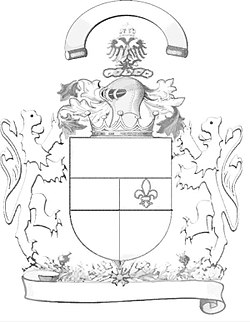
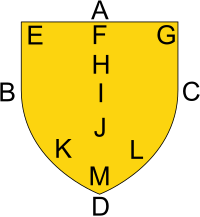
A blank Coat Of Arms.  Each area is designated for certain elements.  The following diagram lists out what achievement goes where on the Coat Of Arms.  Very strict rules by the way.

Coat Of Arms, Heraldic, Family History, Family Acheivements, Family Fun, Family, Ancestors, Ancestor Acheivments, family Genealogy, Genealogy
Points of an escutcheon or heraldic shield:[1]
A – Chief
B – Dexter
C – Sinister
D – Base
E – Dexter Chief
F – Middle Chief
G – Sinister Chief
H – Honour Point
I – Fess Point
J – Nombril Point
K – Dexter Base
L – Sinister Base
M – Middle Base (seldom used)


A coat of arms is a unique heraldic design on an escutcheon (i.e. shield), surcoat, or tabard. A surcoat, and subsequently a coat of arms was used by medieval knights to cover, protect, and identify the wearer. Thus these are sometimes called coat armory. The coat of arms on an escutcheon forms the central element of the full heraldic achievement which consists of shield, supporters, crest, and motto. The design is a symbol unique to an individual person or family (except in the UK), corporation, or state. Such displays are commonly called armorial bearings, armorial devices,heraldic devices, or simply arms.
Sometimes the term coat of arms is used to refer to the full achievement, but this usage is wrong in a strict sense of heraldic terminology.[1][2]
The ancient Romans used similar insignias on their shields, but these identified military units rather than individuals. The first evidence of medieval coats of arms is found in the Bayeux Tapestry from the 11th Century, where some of the combatants carry shields painted with crosses. Coats of arms came into general use by feudal lords and knights in battle in the 12th Century. By the 13th Century arms had spread beyond their initial battlefield use to become a kind of flag or logo for families in the higher social classes of Europe, inherited from one generation to the next. Exactly who had a right to use arms, by law or social convention, varied to some degree between countries. In the German-speaking region both the aristocracy and burghers (non-noble free citizens) used arms, while in most of the rest of Europe they were limited to the aristocracy. The use of arms spread to Church clergy, and to towns as civic identifiers, and to royally-chartered organizations such as universities and trading companies. Flags developed from coats of arms, and the arts of vexillology and heraldry are closely related. The coats of arms granted to commercial companies are a major source of the modern logo.

=====In the movie "THE EAGLE"  
Despite no widespread regulation, and even with a lack in many cases of national regulation, heraldry has remained rather consistent across Europe, where traditions alone have governed the design and use of arms.[citation needed] Unlike seals and other general emblems, heraldic achievements have a formal description called a blazon, expressed in a jargon that allows for consistency in heraldic depictions.
Coat Of Arms, Heraldic, Family History, Family Acheivements, Family Fun, Family, Ancestors, Ancestor Acheivments, family Genealogy, Genealogy
In the 21st century, coats of arms are still in use by a variety of institutions and individuals; for example, many European cities and universities have guidelines on how their coats of arms may be used, and protect their use as trademarks.[3][4][5] Many societies exist that also aid in the design and registration of personal arms. Some nations, like England and Scotland, still maintain the same heraldic authorities which have traditionally granted and regulated arms for centuries and continue to do so in the present day.

Shapes of the Sheild veried.
Coat Of Arms, Heraldic, Family History, Family Acheivements, Family Fun, Family, Ancestors, Ancestor Acheivments, family Genealogy, Genealogy
Examples of escutcheon shapes: 1: mediaeval French & English "heater style"; 2: modern French; 3: cartouche (oval); 4: lozenge (usually borne by women); 5: rectangular; 6: Italian; 7: Swiss, 8: English,Tudor arch (16th century); 9: Ã  bouche; 10: Polish; 11: traditional Iberian

Inescutcheons as mobile charges[edit]

Inescutcheons may appear in personal and civic armory as simple mobile charges, for example the arms of the House of Mortimer or the noble French family of Abbeville. These mobile charges are of a particular tincture but do not necessarily bear further charges and may appear anywhere on the main escutcheon, their placement being specified in the blazon, if in doubt.
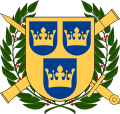
Inescutcheons may also be charged with other mobile charges, such as in the arms of the Swedish Collegium of Arms (illustrated below) which bears the three crowns of Sweden, each upon its own escutcheon upon the field of the main shield. These inescutcheons serve as a basis for including other charges that do not serve as an augmentation or hereditary claim. In this case, the inescutcheons azure allow the three crowns of Sweden to be placed upon a field, thus not only remaining clearly visible but also conforming to the rule of tincture.

Inescutcheon of pretence[edit]

Inescutcheons may also be used to bear another's arms in "pretense".[note 1] In English Heraldry the husband of an heraldic heiress, the sole daughter and heiress of an armigerous man (i.e. a lady without any brothers), rather than impaling his wife's paternal arms as is usual, must place her paternal arms in an escutcheon of pretence in the centre of his own shield as a claim ("pretence") to be the new head of his wife's family, now extinct in the male line. In the next generation the arms are quartered by the son.

Use by monarchs and states[edit]

A monarch's personal or hereditary arms may be borne on an inescutcheon en surtout over the territorial arms of his/her domains,[note 2] as in the arms of Spain, thecoats of arms of the Danish Royal Family members, the greater coat of arms of Sweden, or the arms of Oliver Cromwell as Lord Protector of the Commonwealth of England (1653–1659). The early Georgian kings of England bore an inescutcheon of the royal arms of Hanover on the arms of the Stuart monarchs of Great Britain, whose territories they now ruled.

This is mearly a small introduction to Coat Of Arms.  Please discover more.


All visual items came from Wikipedia


04 January 2015

24 September 2013

Genealogy Roadshow on PBS

Way Cool Genealogy Roadshow

You can watch it at on your own time at:


video.pbs.org/video/2365079236/
copy and paste it into your browser watch it and enjoy the stories and myths come to life 
or be put to rest.


It's a such a delight to watch as 
Josh Taylor & Kenyatta Berry  help answer burning questions.  Who knows you might find info. break down a brick wall watching this episode.


28 August 2013

Genealogy Quotes #4


"Why waste your money looking 
up your family tree?
Just go into politics, and your opponents 
will do it for you."

-Mark Twain-

20 July 2013

Rembrandt & Jan Van Meer Dutch Masters are you a Descendant of theirs?

Are you and you don't know it?

Well find out!

In the meantime while doing the DNA test or other research just find out who they are and enjoy the art work!


Jan Van Meer's 
Girl with the pearl, Jan Van Meer, Dutch Master, Ancestor, Famous artist, Dutch family

Jan Van Meer, Dutch Master, Ancestor, Famous artist, Dutch family

Jan Van Meer, Dutch Master, Ancestor, Famous artist, Dutch family

Rembrandt's
Rembrandt, Dutch Master, Ancestor, Family History, Genealogy


Rembrandt, Dutch Master, Ancestor, Family History, Genealogy

Rembrandt, Dutch Master, Ancestor, Family History, Genealogy


One of myu most favorite things on the Internet is the ability to see beautiful works of art!  Enjoy!


16 July 2013

"Early Ontario Settlers" by Crowder

Cameron, Loyalist, Butlers Rangers, American Revolution, Ontario, Genealogy, Canada, Canadian, Van Volkinburg, Vollick, Putman, Cooke, Cook, Early Settlers of Canada West, Canada West, Supply list, Provisions

A book for Ontario Descendant genealogy research.  If you are doing family history research and don't know where you family went during or right after the Revolution War.  Then you may want to take a look through this book.  It pretty much list out all The Butlers Rangers families & other Loyalist that went to Canada in the late 1783 - 1789.

My Van Valkenburg/Vollicks, Kiltz, Cooke, Hainer, Garter & Warner.

The Index in this book is wonderful.  Saves alot of time since it's done so well.

Who will you find in here?


06 July 2013

Essexville Michigan SUGAR BEETS

My family from Essexville Michigan 
were Sugar Beet Farmers

Spiegel Family was sugar beet farmers

Sugar beets became a cash crop for the area.  With the lumbering age at it close and cleared land what to do but plant Sugar Beets.

Essexville, Sugar Beets, Family Lore, Family History, Sugar Beet country, Bay City


Essexville, Sugar Beets, Family Lore, Family History, Sugar Beet country, Bay City

Essexville, Sugar Beets, Family Lore, Family History, Sugar Beet country, Bay City


Essexville, Sugar Beets, Family Lore, Family History, Sugar Beet country, Bay City


Essexville, Sugar Beets, Family Lore, Family History, Sugar Beet country, Bay City 
above pictures from:  http://www.sweetbeet.com


Since I grew up in Michigan we had Beet sugar.  Then when I moved back east to Boston, I could not find beet sugar all they had was cane sugar. 


14 June 2013

Mayflower Descandants

Are you a Mayflower Descandant?  

How do You Know?

Do you have Old New England roots?

I did not think I would discover Revolution Patriots in my Ancestry.  But alas I did indeed.  So then as I search tru more and more of my ancestors trees I then begin to wonder is the Mayflower possible?

I say it is possible for all Old New England descendants to have roots in the Mayflower passage.

I have just read that if you go to Plimoth/Plymouth you will not be able to see the Mayflower replica.  It is in dry dock for repairs.  I was fortunate to have seen it in June 2010.  Being in the vessel it was cramped quarters at best.  Not much room for privacy.

Mayflower, Plimoth, Plymouth, Genealogy, Cooke, Family lore, Family History, descendants, ancestors

Mayflower, Plimoth, Plymouth, Genealogy, Cooke, Family lore, Family History, descendants, ancestors


While I was in Plimoth that day i picked up the book by Nathaniel  Philbrick "Mayflower".  Amazing research he put into the book.  To  me its a must read for Mayflower descandants.

09 June 2013

Hieronymus Bosch Famous Artist Are you related to him?


All info from WIkipedia
Hieronymus Bosch

Jheronimus Bosch, Dutch Artist, artist, family history, family, genealogy
Attributed to Jacques Le Boucq, Portrait of Hieronymus Bosch. c. 1550
Birth nameJheronimus van Aken
Bornc. 1450
's-Hertogenbosch, Duchy of Brabant (present-day Netherlands)
DiedBuried on 9 August 1516
's-Hertogenbosch, Duchy of Brabant

Very famous piece of his work:

Jheronimus Bosch, Dutch Artist, artist, family history, family, genealogy

08 June 2013

Dutch Family: Peter Paul Rubens - Are you related to them?


Portrait of Peter Paul Rubens wife Helena Fourment  son Frans

You see Peter is a bit older in this portrait.  Young wife.

Rubens, Peter Paul Rubens, Frans Rubens, Helena Fourment, Family history, genealogy
Portrait from web site: www.metmuseum.org

06 June 2013

Haldimand County Branch, Ontario Genealogical Society

Welcome to the Haldimand County Branch,
Ontario Genealogical Society

You're Invited.

Tuesday June 4, 2013 at 1:30 p.m.
Haldimand County Museum and Archives
Open House and
Announcement of Haldimand County Branch
receiving grant from The Ontario Trillium Foundation
more information
Founded in 1991, the Haldimand County Branch is a non-profit organization for people with a shared interest in genealogical and family history for people in the County of Haldimand. We are located on the north shore of Lake Erie.
We assist people whose ancestors were residents in Dunnville, Canborough, Moulton, North Cayuga, South Cayuga, Oneida, Sherbrooke, Rainham, Seneca, and Walpole Townships.
The Haldimand Branch
  • offers assistance to individuals interested in learning about how to research their family tree.
  • publishes and sells transcriptions for cemeteries in Haldimand County.
  • compiles and sells obituaries, death notices, memorial cards, death registrations.
  • has regular branch meetings with guest speakers
  • has research information on census, family trees, books on marriages, War of 1812 and more.

This web-site is owned and operated by Haldimand County Branch of the Ontario Genealogical Society.
© 2006 - 2013 Haldimand County Branch, OGS

07 May 2013

Henry Sylvestre brief history Part 1

My Granddad, Henry Sylvestre
Henry Sylvester, Detroit, French Families of Detroit
 was born in 1905 in the Copper County of Michigan. 
Copper county, Upper Peninsula, Michigan, Ancestors born there
Which is in the Keenewa Pennisula.  With Lake Superior all around it.  I am cold just thinking about that landscape in winter.
  The Place of birth is given as Atlantic Mines.
Copper Mining in Michigan, Copper Mining, Dangerous jobs, Ancestors, Family history, Family Lore, Pasties - lunch


 It is in Adams Township.  Calumet, MI is about 16 miles to the north. I just found out a book discussing the Copper mining in Michigan and how so many were drawn to the region for employment. 
 "Copper Range Chronicle: A Family and an Era" its by Anita Andreini Ahearn - 2003 
I see it can be purchased through Barnes & Nobles.

Now back to Henry, he was of French Canadien decent. 

 Both his mom and dad were born in Quebec. 

 Both great Grandparents moved on over to Copper Country for their chance at a different life. 

As always these emigrating families are on the move after a generation or 2. 

 Then for what ever reason possible higher wages my granddad moved down to the Lower Peninsula to work for GM.   
Related Posts Plugin for WordPress, Blogger...