Showing posts with label History. Show all posts

23 August 2018

365 Days a Year, 
365 Family History-Genealogy Rules 

19.
Do you know who to pass on the genealogy to in your family.  Will it be one of your children grandchild, niece, nephew, or a great one of these.

03 February 2015

A New Baby!

Vintage Welcoming Baby!

In my family there were many babies.  

Lots of Sweet Sentiments were given.


The Cards are from the 1955-1967

27 January 2015

Historic Snowstorms: Do you have an ancestor that was there, did they lose their life cause of it?

Snowmadgeddon

Credit: NASA Earth Observatory.

Ancestors, History, Historic, Sad history, Laura Ingalls Wilder, The Long Winter, Children die in snowstorm,USA, Historic Snowstorms


Two blizzards in February 2010 broke snowfall records in the mid-Atlantic region, such as a whopping 32.4 inches (82.3 cm) of snow at Washington's Dulles International Airport. After the second snowstorm in February, 68.1 percent of the country was blanketed by snow. The term "snowmadgeddon," around since 2009, stuck when President Barack Obama used it at the Democratic National Committee's winter meeting during the storm.


Ancestors, History, Historic, Sad history, Laura Ingalls Wilder, The Long Winter, Children die in snowstorm,USA, Historic Snowstorms
The Super Bowl 9 Jan 1975 Blizzard

Credit: Wikimedia Commons/NOAA                                                                                                                  
The Super Bowl Blizzard takes the trophy for most unusual: A record low-pressure system (961 millibars), it sparked tornadoes in the Southeast before heading into the upper Midwest, where heavy snows and cold killed more than 100,000 farm animals. Unlike many winter storms, which sweep in from Canada, the Super Bowl Blizzard started in the Pacific and crossed the Rocky Mountains. As it headed over the Plains on Jan. 9, 1975, the first of 45 tornadoes spun up. The two-day outbreak killed 12 people and injured 377. In the Midwest, the front mixed with Arctic air from the north and warm Gulf of Mexico moisture, the classic ingredients for a winter blizzard. Heavy snows and winds kill 58 people.


The Armistice Day Blizzard Nov 11 1940

Weather related deaths, Ancestors, History, Historic, Sad history, Laura Ingalls Wilder, The Long Winter, Children die in snowstorm,USA, Historic Snowstorms,1940
Credit: Library of Congress

An exploding bomb (weather lingo for a large pressure drop) went off over the Midwest on Nov. 11, 1940, as cold Northern air collided with warm Gulf Coast moisture. The raging blizzard quickly chilled the air, and fierce winds built 20-foot (6 m) snowdrifts. A total of 145 deaths were linked to the storm, including about 25 duck hunters who were not prepared for the cold weather forecasters had not predicted the severity of the coming storm.


Knickerbocker Storm, Historic Snowstorms Blizzaeds and the like, USA, Snowstorm, Bad Snowstorm, The Long Winter


d:The Knickerbocker Storm Jan 27/28 1922 Storm

Credit: Library of Congress

This blizzard gained notoriety for its heavy, wet snows, which collapsed the roof at one of the most popular venues in Washington, D.C. The storm takes its name from the cave-in at the Knickerbocker Theater, which killed 98 people and injured 133. As much as 3 feet (90 cm) of snow fell in the Maryland, Virginia and Pennsylvania during the blizzard, which hit Jan. 27 and Jan. 28 in 1922.


e:The Great Appalachian Storm Nov. 24 1950

Credit: NOAAA winter storm marked by heavy rains, winds and blizzard conditions, the Great Appalachian Storm formed over North Carolina before looping around Ohio, devastating much of the Southeast along the way. The Nov. 24, 1950, storm, responsible for 353 deaths, became a case study for tracking and predicting winter   weather.
                                                     

 The Children's  Blizzard 12 Jan 1888 

Credit: Wikimedia Commons/NOAA                                                                    
Ancestors, History, Historic, Sad history, Laura Ingalls Wilder, The Long Winter, Children die in snowstorm,USA, Historic Snowstorms


The Children's Blizzard earned its tragic name because of its timing. On Jan. 12, 1888, temperatures dropped from a relatively balmy few degrees above freezing to a wind chill of minus 40 degrees Fahrenheit (minus 40 degrees Celsius) in the Dakota Territory and Nebraska. Because of the warm day, thousands were caught unprepared for cold weather, including schoolchildren sent home by their teachers during the storm. The death toll was 235.  
Could this be the storm in which children lost their lives in the book "The Long Winter" by Laura Ingalls Wilder? 


Nov. 7, 1913

g:The White Hurricane           

Credit: Wikimedia Commons/Marine Museum of the Great Lakes                          
Ancestors, History, Historic, Sad history, Laura Ingalls Wilder, The Long Winter, Children die in snowstorm,USA, Historic Snowstorms

A blizzard with hurricane-force winds, this devastating storm is the deadliest natural disaster to ever hit the Great Lakes region. More than 250 people died when the winter whopper, called a November gale, struck the Great Lakes on Nov. 7, 1913. Waves on the lakes reached 35 feet high (10 meters) and the storm's sustained wind speed reached 60 mph (96 km/h) for more than half a day.  

The Storm of the Century 12 March 1993 Credit: NASA.

Can a storm be a both blizzard and a cyclone? Yes, and it's nasty. The Storm of the Century wreaked havoc from Cuba to Canada. As strong as a hurricane, covering an entire continent, the storm was responsible for 310 deaths, $6.6 billion in damage, and shut down the South for three days. Coming a week before spring, on March 12, 1993, the hit was hard to take. However, the Storm of the Century marked the first successful five-day forecast by the National Weather Service of a storm's severity, and a State of Emergency was declared in some regions before snow even started falling.


Ancestors, History, Historic, Sad history, Laura Ingalls Wilder, The Long Winter, Children die in snowstorm,USA, Historic Snowstorms
        The Great Blizzard of 1899

Credit: Library of CongressFrom Georgia to Maine, a punishing storm shut down the Eastern Seaboard beginning Feb. 11, 1899. The wintry weather brought record-low temperatures, some of which still stand today, as well as record snowfall. The snow showers started in Florida and moved north, dropping 20 inches (50 centimeters) in Washington, D.C., in a single day and a record 34 inches (86 cm) in New Jersey.


Ancestors, History, Historic, Sad history, Laura Ingalls Wilder, The Long Winter, Children die in snowstorm,USA, Historic Snowstorms

  The Great Blizzard of 1888 

Credit: Library of CongressMore than 400 people in the Northeast died during the Great Blizzard, the worst death toll in United States history for a winter storm. On March 11 and March 12 in 1888, this devastating nor'easter dumped 40 to 50 inches (100 to 127 cm) of snow in Connecticut, Massachusetts, New Jersey and New York. Huge snowdrifts buried houses and trains, and 200 ships sank in waves whipped up by fierce winds.
all information taken from: http://www.livescience.com/31880-countdown-10-worst-blizzards.html

This list does not contain a very important Blizzard know as the Blizzard of "78"  which was from Michigan To the Atlantic New England Coast

16 December 2014

Sheriff Role in Old England

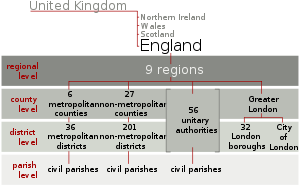
Anglo-Saxon local government (700–1066 AD)[edit]

The Kingdom of Wessex, c. 790 AD, was divided into administrative units known as shires. Each shire was governed by an Ealdorman, a major nobleman of Wessex appointed to the post by the King. The term 'Ealdorman' (meaning 'elder-man') gradually merged with the Scandinavian Eorl/Jarl (designating an important chieftain), to form the modern 'Earl'. However, the Shires were not comparable with later Earldoms, and were not held in the Ealdorman's own right.
The shires of Wessex at this time have essentially survived to the present day, as counties of England (currently ceremonial counties). They included Defnascir (Devon), Sumorsaete (Somerset), Dornsaete (Dorset), Wiltunscir (Wiltshire), Hamptunscir (Hampshire). When Wessex conquered the petty kingdoms of southern England, namely Cent and that of the South Saxons, these were simply reconstituted as shires (modern Kent and Sussex respectively).
As Wessex took over progressively larger areas of Mercia, East Anglia and Northumbria, the new lands were divided into shires, usually named after the principal town in the new shire; hence Northamptonshire, Oxfordshire, Derbyshire and so on. Most of the historic counties of England (and modern Ceremonial counties) south of the Mersey and Humber derive directly from this time.


Another important official of the shire was the shire-reeve, from whence the more modern sheriff is derived. The shire-reeve was responsible for upholding the law, and holding civil and criminal courts in the shire.[1] The office of sheriff is still important in some Anglophone countries (e.g. the USA), but now a ceremonial role in the England


The early medieval period (1100–1300)[edit]

During the medieval period, local administration basically remained in the hands of the feudal aristocracy, who governed affairs in their fiefs. The enserfment of the population by the Norman system diminished the importance of hundreds as self-regulating social units since law was not imposed from above, and since the population was immobilised. Instead the basic social unit became the parish, manor or township.
The counties remained important as the basis for the legal system. The sheriff remained the paramount legal officer in each county, and each county eventually had its own court system for trials (the Quarter Sessions). Although the Hundred Courts continued in use resolving local disputes, they diminished in importance. During the reigns of Henry III, Edward I and Edward II a new system emerged. Knights in each county were appointed as Conservator of the Peace, being required the help keep the King's Peace. Eventually they were given the right to try petty offences which had formerly been tried in the Hundred Courts. These officers were the forerunners of the modern magistrates' courts and justices of the peace.


from Wikipedia: History of local government in England


29 November 2012

Hadrian's Wall England

I happened across this amazing web site with a picture tour of 
Hadrian's Wall


Ancestors, History, Hadrian's Wall


Check it out here: http://www.hadrianswallcamera.co.uk


Ancestors, History, Hadrian's Wall


Ancestors, History, Hadrian's Wall

Check them out.  I am sure you will enjoy the photo tour on the web site.  Then think about your ancestors.  
Did they help build it?  Did they have to go past it during their daily life and fear for their lives?

In the King Arthur movie ith Clive Owen & Keira Knightley.  The wall is a part of the story.

Learn more ever day.


12 November 2012

Where do these diffrent names ever come from?

dusyl, ancient names, ancient family, ancient lore, sylvester, ducap


I find Ancient names so fascinating


Every week I am treated to rare names in the “Weekly Genealogist newsletter” sent by NEHGS.  This week it’s the name Boudica.  I wiki ‘d  her this week in search of deep histoy of England and the Roman occupation.  I am surprised Boudica was such a strong woman yet her name has not carried through history like one would think.  I am thrilled to read this entry this week:

dusyl, ancient, names, fun, history, family lore, family history


Name Origins 

by Julie Helen Otto,Staff Genealogist
BOADICEA (f): A Latinized form of BOUDICA, the widowed chieftainess of the Brythonic Celtic Iceni (who held lands in what is now Norfolk). In an arrangement common with client kingdoms in recently conquered Roman territory, her husband Prasutagus had willed his domain to his daughters and to Rome — which disregarded the daughters’ claims. Boudica was subsequently severely flogged, her daughters raped; outraged by their treatment, she led the Iceni, Trinovantes, and other tribes in a bloody rebellion in A.D. 60/61 which led to the destruction of Camulodunum (Colchester, Essex), Londinium, and Verulamium (St. Albans), before the Romans crushed the uprising at the Battle of Watling Street. Boudica’s revolt was seen in later years as a heroic resistance to Roman tyranny in what is now England, and is commemorated in Thomas Thornycroft’s statue, “Boadicea and Her Daughters” (1901–2), by the Thames River near Westminster Pier, London.
Boadicea Townsend m. Stafford, Conn. 20 Aug. 1771 Thomas Warner (Stafford, Conn. Congregational Church Records, Corbin Coll. [SG COR 5] 176, p. 14). In about 1787 Thomas and Mehitable (Griggs) Wakefield of Enfield, Conn., had a daughter Boadice Wakefield, who died there 8 Sept. 1807 in her 20th year (“O: don’t forget that you must die, / and turn to dust as well as I”) (Francis Olcott Allen, The History of Enfield, Connecticut, Volume III, 3 vols. [Lancaster, Penn., 1900], 3:2479). At least one bearer of this rare given name used the nickname “Dicy” (which suggests di- could be the accented syllable). Boadicea “Dicy” Scott (not, so far as I know, related to either Mrs. Townsend or her daughter) m. Kent, Conn. (by Rev. Daniel Porter), 29 May 1802 William Brown of Kent (Kent VRs, Barbour Collection of Conn. VRs, citing orig. town rec. vol. 2:64).

I really believe that there is so much more to the Legacy of Bodica.  Would love to know what became of her children etc…

01 November 2012

Joseph Jencks I-III of Saugus Iron Works to Governor of Rhode island


Joseph Jencks I of Saugus Iron Works
First Patent
Built First Fire Engine in New World
The following information is from Wikipedia:
Joseph Jencks I
(b. England 1602, d. Lynn, MA 1682) Joseph Jencks settled in Lynn, Massachusetts by 1643, arriving as a widower. On March 6, 1646, he was awarded the first patent in North America by the General Court of Massachusetts, for making scythes. This basic scythe design remained in use for over 300 years. In 1654 he built the first fire engine in North America, commissioned by the city of Boston. The site of the Jencks forge is at the Saugus Iron Works National Historic Site.  

Saugus Iron Works, Massachusetts, Jencks

Note if you go to the Iron Works you will not know with out being told where his forge would have been.


Joseph Jencks II
(b. England 1632, d. Pawtucket, RI 1717) Arrived in Massachusetts in 1645, having remained in England until his father was settled. He was the earliest known settler of Pawtucket, Rhode Island, in 1671. He built and operated the first sawmill in the area, which was destroyed by fire during King Philip's War. He was a Deputy to the Rhode Island Assembly for a number of terms in the late 17th century, also Counselor of the Governor in 1681.

Joseph Jencks grandson of Joseph Jencks of Saugus Iron Works

(b. Pawtucket, RI 1656, d. Providence, RI 1740) From 1691 through 1732, he continuously held high offices of public trust in Rhode Island, culminating as Governor from 1727 to 1732
"References
  • "Founders of Early American Families", 2nd Revised Edition (2002) by Meredith B. Colket, Jr. and Keith M Sheldon
  • "The Jenks Family of America" by W.B. Browne (1952)
  • "Genealogical Dictionary of Rhode Island" by John Osborne Austin (Revised 1969 Edition by G. Andrews Moriarty)
  • "History of the United States Patent Office" by Kenneth W. Dobyns (1994)"

Marriage for the Joseph Jenks:

Joseph Jenks I  was married to Sarah Fulwater.
When Joseph made it to the New World he was a widower.
Their Son Joseph Jenks II was married to Ester Ballard of Saugus, MA

And their son Joseph Jenks III was married to Martha Brown.
They had a daughter Martha Jenkes b.1689 in Pawtucket, RI.
She was my 8th Great Grandmother.
She married Pegleg Cook.  My question how does a Governors daughter marry someone named Pegleg Cook???

From Wikipedia:

History of Saugus Iron Works

Saugus Iron Works National Historic Site

From Wikipedia, the free encyclopedia
Jump to: navigation, search
Saugus Iron Works National Historic Site
Reconstructed Forge and Mill
Saugus Iron Works National Historic Site is located in Massachusetts
Location: Off U.S. 1, Saugus, Massachusetts
Coordinates: 42°28′4″N 71°0′32″WCoordinates: 42°28′4″N 71°0′32″W
Area: 9 acres (0.04 km²)
Built: 1648
Visitation: 11,153 (2006)
Governing body: National Park Service
NRHP Reference#: 66000047[1]
Significant dates
Added to NRHP: October 15, 1966
Designated NHLD: November 27, 1963
Designated NHS: April 5, 1968
Saugus Iron Works National Historic Site is a National Historic Site located about 10 miles (16 kilometers) northeast of Downtown Boston in Saugus, Massachusetts. It is the site of the first integrated ironworks in North America, founded by John Winthrop the Younger and in operation between 1646 – 1668. It includes the reconstructed blast furnace, forge, rolling mill, shear, slitter and a quarter-ton drop hammer.
The facility is powered by seven large waterwheels, some of which are rigged to work in tandem with huge wooden gears connecting them. It has a wharf to load the iron onto ocean-going vessels, as well as a large, restored 17th-century house.

Overview

With the archaeological site of the 17th-century iron-making plant, the museum collection, the 17th-century Iron Works House, and the reconstructed iron works complex, Saugus Iron Works National Historic Site illustrates the critical role of iron making to 17th-century settlement and its legacy in shaping the early history of the nation. Sixteen years after the Puritans settled Boston, they built this impressive, large manufacturing complex. At the time there were only a dozen such high-tech plants in all of Europe.
Skilled metallurgists John Turner and John Vinton were brought in to manage the fineries. Unskilled laborers cut wood for making charcoal, and quarrying the bog ore and flux.
The site's enclave setting on the Saugus River, featuring an open-air museum with working water wheels, evokes a unique experience for park visitors. These resources demonstrate 17th-century engineering and design methods, iron-making technology and operations, local and overseas trade, and life and work in the Massachusetts Bay Colony.[2]
The original manufacturing site served as a training ground for skilled iron workers for what would become America's iron and steel industry. Iron making provided the infrastructure for the rise of other colonial industries. Called, "the forerunner of America's industrial giants," the site served as a center for technology, innovation and invention. The site interprets early industrial manufacturing, with its enduring social, political and environmental ramifications.[3]
Edit: Current evidence of the "Ironmaster's house" has determined that it was built by a man named Appleton in circa 1681 and that this was long after the iron works had ceased operation. This house, therefore, was not the Iron Master's house as originally portrayed. (Source: National Park Service, Saugus Iron Works"

Site reconstruction and restoration

The blast furnace, forge, rolling and slitting mill, warehouse, and dock area are all reconstructed on original sites and are based upon extensive archaeological excavations done between 1948 and 1953 by Roland W. Robbins. Hundreds of court records, inventories, and accounts of the original iron works were also consulted to produce a full-size (albeit, conjectural) model of the seventeenth century iron works. The "Iron Works House" is a timber framed, 1680s mansion house, still standing on its original location. It was constructed about a decade after the iron works ceased production.[4]
Between 2005 and 2008 the historic site underwent significant renovations. The 1917 museum building (a chicken coop, turned, blacksmith shop, turned museum) underwent major restoration work and new exhibits were installed during the winter of 2006-2007. Most areas reopened in fall 2007 or spring 2008, however the park is closed seasonally from November to March.
Related Posts Plugin for WordPress, Blogger...