21 November 2012

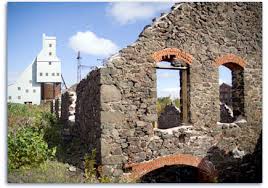
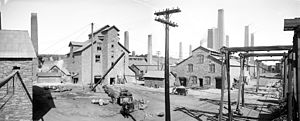
Calumet Michigan/ Red Jacket, Michigan

My ancestors, Verville & Sylvester, worked in the Cooper Mines of red Jacket/Calumet, Michigan

From Wikipedia:
History
Red Jacket, Calumet, Mining, Copper Mining, Copper Country, Copper, Sylvester, Vervillr, Boutbout
What is now Calumet was settled in 1864, originally under the name of "Red Jacket",[5]named for a Native American Chief of the Seneca tribe. Until 1895 the name "Calumet" was used by the nearby town of LauriumMichigan; present day Calumet was not legally named so until 1929.
Red Jacket grew due to the copper mines in the area. It was incorporated as a town in 1867. The copper mines were particularly rich; the Boston-based
Calumet and Hecla Mining Company Red Jacket, Calumet, Mining, Copper Mining, Copper Country, Copper, Sylvester, Verville, Bourbout

Red Jacket, Calumet, Mining, Copper Mining, Copper Country, Copper, Sylvester, Verville, Bouchaud, Bourbout
 produced more than half of the USA's copper from 1871 through 1880.[6] In addition to copper mining and smelting, the region also supported the dairyindustry and truck farming. Many immigrants (from Poland, etc.) settled there in the late 19th century.[7]  By 1900, Red Jacket had a population of 4,668, and Calumet Township, which contained Red Jacket and nearby mining towns, had a population of 25,991. However, in 1913, Red Jacket suffered from the Copper Country Strike of 1913-1914, and the population began to decline. In the same year, the town was the site of the Italian Hall Disaster. Striking miners and their families were gathered on Christmas Eve for a party in Italian Hall, when the cry of "fire" precipitated a stampede that crushed or suffocated seventy-three victims, the majority of them children. The identity of the person(s) who started the stampede has never been determined. Folk singer Woody Guthrie's song, "1913 Massacre", is based on this event.
Red Jacket, Calumet, Mining, Copper Mining, Copper Country, Copper, Sylvester, Verville, Bouchaud
Loss of wartime demand caused the copper price to drop following World War I. With the decreased demand for copper, thousands left Red Jacket in the 1920s, many moving toDetroitMichigan where the automobile industry was booming. 
In 1929, Red Jacket and surrounding company towns including "Laurium, Hecla, and South Hecla" were reincorporated as the town of "Calumet".[8] To be even more confusing, the area once officially known as Calumet was then renamed to Laurium.
During the Great Depression, almost all mines were shut down. As a result, many miners and their families left to find work. In 1950, the population of Calumet was 1,256 people. Small-time mining continued in the area, particularly during World War II until it was shut down completely by a labor strike in 1968.
Red Jacket, Calumet, Mining, Copper Mining, Copper Country, Copper, Sylvester, Verville, BouchaudRed Jacket, Calumet, Mining, Copper Mining, Copper Country, Copper, Sylvester, Verville, Bouchaud
The Calumet Historic District is another area of interest, listed like the Calumet Downtown Historic District on the National Register of Historic Places.


20 November 2012

Lake Erie Ship Wrecks

In seeking out one of my ancestors origins there was a ship wreck in Lake Erie spoke of. 

Putman, Caryl, DuSyl, Family History, Ontario, Shipwreck, Welland, Niagara


Finding out such information based in fact has been very difficult.  

Putman, Caryl, DuSyl, Family History, Ontario, Shipwreck, Welland, Niagara


There are several Lake Erie shipwreck web sites to use:  

http://greatlakeshistory.homestead.com/

http://www.alcheminc.com/shipwrck.html

http://www.shipwreckworld.com

http://www.ohioshipwrecks.org/Shipwrecks.php

http://www.lakeerieimprovement.org/shipwrecks/

http://seagrant.psu.edu/education/stear/SHIPWRECKS%20Lost.pdf


Great Lakes Shipwrecks

greatlakeshistory.homestead.com/files/m.htm

http://www.northernmaritimeresearch.com/famous-gls.html


Putman, Caryl, DuSyl, Family History, Ontario, Shipwreck, Welland, Niagara, Lake Erie

Putman, Caryl, DuSyl, Family History, Ontario, Shipwreck, Welland, Niagara, Lake Erie


Enjoy the information & Good Luck!
You have to check them out and see if you can gain information for yourself.

19 November 2012

Traditional Thanksgiving

Family Time

Who do you have over on Thanksgiving?  Where are you invited to?  Where do you go if you have more then one invatation?

Many questions this seasons gives us.  How to you choose?  Is it easy to choose?

How about the extra people you would like to include.  When do you ask to have them added to the guest list.  Are you frazzled if someone comes you were not expecting if your the one hosting the dinner?

Good Luck

Descendants of Mayflower

I so enjoy it when I can help someone discover a bit more about themselves.  Who does not want to know more about themselves?  As in the case of one of my clients that if you keep reading you will certainly find out.


Mayflower replica, Dow, Standish, Caryl, Stoddard, Lewis, Newton, Fmaily Lore, Family History, Genealogy


  Some times a client will bring me only a small amount of their family history.  While others will have 3 complete generations to work with.


Family Chart, Myles Standish, Mayflower, Dow, Dody, Standish, Plimouth, Native American,


Now my story about being a Mayflower descendant:

 My client, lets call her JanieSue, first gave me her info on her husbands family.  I quickly found his lines out.  Old New Hampshire family lines.  It was quick.  I kept having to ask her about her father & mothers lines.  She had a family trip already planned.  She took her trip and came back with information for her fathers side. 


Myles Standish, Mayflower, Plimouth, Plymouth, Bay Colony, Dow, Snowman, Family Lore, Family History
   I took the information she gave me.  I had one lead after another.  It was great finding out that she is a descendant of the Military Leader on the Mayflower Myles Standish.  
She was so excited to find this out.  I was most happy to have given her the news.


Sage & the Attachment to Thanksgiving Turkey

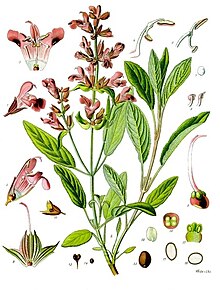
Sage     

The all important herb for your Thanksgiving turkey.  Where does Sage originate?


Sage History from Wikipedia           


Salvia officinalis has been used since ancient times for warding off evil, snakebites, increasing women's fertility, and more. The Romans likely introduced it to Europe from Egypt as a medicinal herb.[4] Theophrastus wrote about two different sages, a wild undershrub he calledsphakos, and a similar cultivated plant he called elelisphakosPliny the Elder said the latter plant was called salvia by the Romans, and used as a diuretic, a local anesthetic for the skin, a styptic, and for other uses. Charlemagnerecommended the plant for cultivation in the early Middle Ages, and during the Carolingian Empire, it was cultivated in monastery gardens.[4] Walafrid Strabo described it in his poem Hortulus as having a sweet scent and being useful for many human ailments—he went back to the Greek root for the name and called it lelifagus.[5]
The plant had a high reputation throughout the Middle Ages, with many sayings referring to its healing properties and value.[6] It was sometimes called S. salvatrix (sage the savior), and was one of the ingredients of Four Thieves Vinegar, a blend of herbs which was supposed to ward off the plague. Dioscorides, Pliny, and Galen all recommended sage as a diuretic, hemostaticemmenagogue, andtonic.[5]

  1. 4 ^ a b Watters, L. L. (1901). An Analytical Investigation of Garden Sage (Salvia officinalis, Linne). New York: Columbia University.
  2. 5 ^ a b c Kintzios, Spiridon E. (2000). Sage: The Genus Salvia. CRC Press. pp. 10–11.ISBN 978-90-5823-005-8.


Sage and Turkey      

I cannot find a definite answer as to when Sage was first 
used with Turkey.  Sage as reading above you know it came 
from the Old World.  So it may or may not have been used 
with turkey right away. How ever I love the flavor of Sage 
with any poultry.  Rosemary add a great flavor too.

So did your Ancestors use Sage in their cooking?  My mom 
did not cook with it since my Dad does not like it.  So as an 
expermental cook I quickly learned of its great flavor.


18 November 2012

Vermont

Ancestor moving from southern New England to Vermont

Caryl, Vermont, Family, Ancestors, Family History


Caryl, Family History, Family Lore, Ancestors, Vermont, Moved


Caryl, Family History, Family Lore, Ancestors, Vermont, Moved, Mastick


Mastick, Paddock,  Hadock, Caryl, Family History, Family Lore, Ancestors, Vermont, Moved

16 November 2012

Family Ties That Bind Us

Think on those words.  The ties that bind us.


Of course they are not visible these ties.
Some of my experiences with these family ties have been happy sad & exhausting.  I have always know no matter where I was in life that there are those bound to me.  By family ties & blood.

Than I think of the Chinese girls who would have their feet bound when they were quite young.  So they could never really walk on their own.  We in the western culture that can be most disturbing.

Bound feet, Family History, family, traditions


Can you look at it like this?  That with bound feet this girl from now on must rely upon someone else to do some very basis things for her.  Before she had this done she most likely did not need to much help.  Now with her feet bound so to is her family much more bound to her?

The co-dependance in family is strongly illustrated in the Chinese feet binding tradition.  To be tied to our families is a very good thing.   

Family Ties, Family History, DuSyl, Holiday, Praying family,


When you join with your family & friends this Thanksgiving think about how you are bound to them.  Think of your ties to them.  Then maybe see how you can strengthen them and encourage better family relation. 

15 November 2012


Indian Pudding

If you would have been at an Early Thanksgiving the taste and flavors you would have experienced would be very robust. 

Strong taste of molasses, ginger, root vegetables, corn, cormnmeal, brown sugar and deer meat.  Men & women had very hearty appetites with all their daily hard work and exposure to the elements.

This year for Thanksgiving  you may want to included a Old but Newdessert recipe for your family.

I have been making this recipe un-changed for over 19 years.  I had been given a box of old Recipe books.  Some I kept the rest I passed on.

I kept the “The Gourmet Cookbook” vol II.  It was reprinted back in 1958.  It has proved to be one of my favorite recipe books.

The recipe I spoke of is the one for Indian Pudding.
It is a simple recipe with minimal ingredients.
I made a pudding this morning.  So I am including photos of the process.


Recipe:  

Scald 3 cups of milk in a double boiler. Add in 6 tablespoons of cornmeal {any cornmeal will do}.  You will stir this constantly for 15 minutes.  Don’t walk away or the milk can burn.

Thanksgiving dinner ideas, Indian Pudding recipe, Indian pudding, Indian, Thanksgiving recipe, Thanksgiving


A ½ cup of Molasses stirred in.

Thanksgiving dinner ideas, Indian Pudding recipe, Indian pudding, Indian, Thanksgiving recipe, Thanksgiving


Then stir in ¼ cup each of Butter & Sugar
Follow with ½ teaspoon of Salt, ground Ginger, & Cinnamon. Stir all together.
Thanksgiving Dinner Ideas Recipes, Indian Pudding recipe, Indian pudding, Indian, Thanksgiving recipe, Thanksgiving, New England, Narragansett


Into your buttered baking dish you will turn the batter into it.  The batter in not thick.  Flows right into the buttered baking dish.

Indian Pudding recipe, Indian pudding, Indian, Thanksgiving Dinner recipe, Thanksgiving, New England, Indians


Pour 1 cup of milk over the top.  Place it in a slow oven.  The baking dish will sit in a water bath.

Indian Pudding recipe, Indian pudding, Indian, Thanksgiving recipe, Thanksgiving


Bake at 250 degrees for 3 hours.  Serve the pudding hot. Garnish it with vanilla Ice Cream and or vanilla flavored whipping cream.

Enjoy this delicious full flavored Indian Pudding.

Let me know if you make it and how you enjoy it.

14 November 2012

Name Origins


Name Origins from NEHGS

by Julie Helen Otto, Staff Genealogist of NEHGS
DINARZADA (f): In The Arabian Nights’ Entertainments (the title of the first English edition, published in 1706), Dinarzade was the sister of SCHEHEREZADE, the great teller of tales. Dinazada Covellwas baptized Edgartown, Mass. 13 Nov. 1774, daughter of Joseph and Judith (____) Covell (Edgartown VRs, p. 26).

Name origins, Pastees, Diarzada, NEHGS, namilg traditions

Family Associations & Organizations

I know of a few Family Associations. 
 Please let me know about yours and I will add it in.
Gladney, Gladwin, Gaylord, Michigan


Wightman, Family Association, Family History, DuSyl
Tang Tong Family, Family History, Genealogy
Sisson Family, genealogy, Family History 

13 November 2012

Name Origin "Rufus"

Name Origins/from NEHGS

by Julie Helen Otto, Staff Genealogist


England, Rufus, d. 1100, dusyl, name origins, history


RUFUS (m) (Latin red): William II “Rufus” (d. 1100) succeeded his father, William I “the Conqueror,” as King of England in 1087 and was killed by an arrow while hunting in the New Forest. The name, used as a nickname (for red-headed or ruddy men, presumably) throughout medieval Europe, was revived as an English proper name in its own right in the late eighteenth century. 

Rufus Allen, Belligham MA, Belligham, Samuel Polly Allen

 Rufus Allen, b. Bellingham, Massachusetts, 27 Nov. 1824, was a son of Samuel and Polly (__) Allen.

12 November 2012

Impact of "Ring Around The Rosie" on your Ancestors

England, Plaque, Bubonic Plaque, population,
What physicians wore when visiting the Plaque Victims.
It was believed that the disease was airborne.  So the long beak facial mask was stuffed with herbs to protect the doctor.

The nursery rhyme has a Dark Origin.
The Black Plaque was the cause of it.
The Rhyme dates only back to 1665 with Londons Great Plaque.

What do you know of the Bubonic Plaque?

The Bubonic Plaque has a very Ancient history.

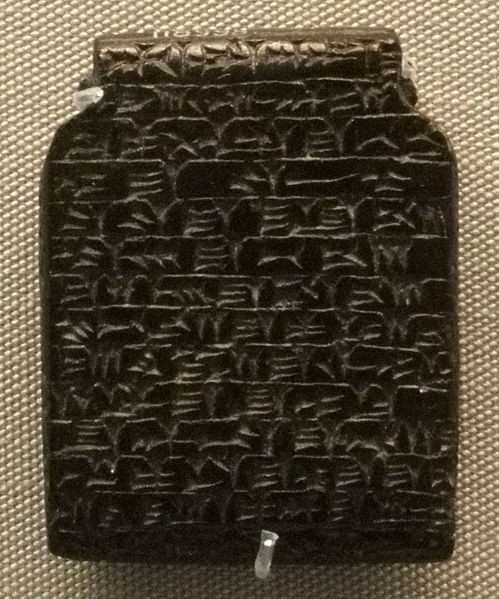
amulet, plaque, Ancient, genealogy, family historyAmulet picture from Wikipedia  Amulet (800 BC – 612 BC) to ward off plague inscribed with a quotation from theAkkadian Erra Epic


from Wikipedia:

Antiquity


Family History, Family Lore, History,  Detestation,
Nicolas Poussin (1594–1665), French. The Plague of Ashdod, 1630. Oil on canvas, 148 x 198 cm. Musée du Louvre, Paris, France, Giraudon/Bridgeman Art Library.
The earliest account describing a possible plague epidemic is found in I Samuel 5:6 of the Hebrew Bible (Tanakh). In this account, thePhilistines of Ashdod were stricken with a plague for the crime of stealing the Ark of the Covenant from the Children of Israel. These events have been dated to approximately the second half of the 11th century BC.[citation needed] The word "tumors" is used in mostEnglish translations to describe the sores that came upon the Philistines. The Hebrew, however, can be interpreted as "swelling in the secret parts".[citation needed] The account indicates that the Philistine city and its political territory were stricken with a "ravaging of mice" and a plague, bringing death to a large segment of the population.
In the second year of the Peloponnesian War (430 BC), Thucydides described an epidemic disease which was said to have begun inEthiopia, passed through Egypt and Libya, then come to the Greek world. In the Plague of Athens, the city lost possibly one third of its population, including Pericles. Modern historians disagree on whether the plague was a critical factor in the loss of the war. Although this epidemic has long been considered an outbreak of plague, many modern scholars believe that typhus,[13] smallpox, or measles may better fit the surviving descriptions. A recent study of DNA found in the dental pulp of plague victims suggests that typhoid was actually responsible.[14]
In the first century AD, Rufus of Ephesus, a Greek anatomist, refers to an outbreak of plague in LibyaEgypt, and Syria. He records that Alexandrian doctors named Dioscorides and Posidonius described symptoms including acute fever, pain, agitation, and delirium. Buboes—large, hard, and non-suppurating—developed behind the knees, around the elbows, and "in the usual places." The death toll of those infected was very high. Rufus also wrote that similar buboes were reported by a Dionysius Curtus, who may have practiced medicine inAlexandria in the third century BC. If this is correct, the eastern Mediterranean world may have been familiar with bubonic plague at that early date.[15][16]

 Europe, Rats, Black, History

[edit]Medieval and post-medieval pandemics

Local outbreaks of the plague are grouped into three plague pandemics, whereby the respective start and end dates and the assignment of some outbreaks to either pandemic are still subject to discussion.[17] According to Joseph P. Byrne from Belmont University, the pandemics were:
  • the first plague pandemic from 541 to ~750, spreading from Egypt to the Mediterranean (starting with the Plague of Justinian) and northwestern Europe[18]
  • the second plague pandemic from ~1345 to ~1840, spreading from Central Asia to the Mediterranean and Europe (starting with theBlack Death), and probably also to China[18]
  • the third plague pandemic from 1866 to the 1960s, spreading from China to various places around the world, notably the US-American west coast and India.[19]
  • However, the late medieval Black Death is sometimes seen not as the start of the second, but as the end of the first pandemic – in that case, the second pandemic's start would be 1361; also vary the end dates of the second pandemic given in literature, e.g. ~1890 instead of ~1840.[17]

    [edit]First Pandemic: Early Middle Ages (Plague of Justinian)

    The Plague of Justinian in AD 541–542 is the first known attack on record, and marks the first firmly recorded pattern of bubonic plague. This disease is thought to have originated in China.[20] It then spread to Africa from where the huge city of Constantinople imported massive amounts of grain, mostly from Egypt, to feed its citizens. The grain ships were the source of contagion for the city, with massive public granaries nurturing the rat and flea population. At its peak the plague was killing 10,000 people in Constantinople every day and ultimately destroyed perhaps 40% of the city's inhabitants. It went on to destroy up to a quarter of the human population of the eastern Mediterranean.
    In AD 588 a second major wave of plague spread through the Mediterranean into what is now France. It is estimated that the Plague of Justinian killed as many as 100 millionpeople across the world.[21][22] It caused Europe's population to drop by around 50% between 541 and 700.[23] It also may have contributed to the success of the Arab conquests.[24][25] An outbreak of it in the AD 560s was described in AD 790 as causing "swellings in the glands ... in the manner of a nut or date" in the groin "and in other rather delicate places followed by an unbearable fever". While the swellings in this description have been identified by some as buboes, there is some contention as to whether the pandemic should be attributed to the bubonic plague, Yersinia pestis, known in modern times.[26]

    [edit]Second Pandemic: from 14th century (Black Death) to 19th century

    Bubonic Plague, Europe, Death
    "Der Doktor Schnabel von Rom" ("Doctor Beak of Rome"). The beak is a primitive gas mask, stuffed with substances (such asspices and herbs) thought to ward off the plague.
    Rate of bubonic deaths, rat, history
    Map showing the spread of the Black Death (bubonic plague) in Europe during the 1347–1351pandemic which is believed to have started inChina and spread west, reaching the Black Seaby 1347
    From 1347 to 1351, the Black Death, a massive and deadly pandemic originating in China, spread along the Silk Road and swept through Asia, Europe and Africa.[20] It may have reduced the world's population from 450 million to between 350 and 375 million.[27] Chinalost around half of its population, from around 123 million to around 65 millionEuropearound 1/3 of its population, from about 75 million to about 50 million; and Africaapproximately 1/8 of its population, from around 80 million to 70 million (mortality rates tended to be correlated with population density so Africa, being less dense overall, had the lowest death rate). This makes the Black Death the largest death toll from any known non-viral epidemic. Although accurate statistical data does not exist, it is thought that 1.4 million died in England (1/3 of England's 4.2 million people), while an even higher percentage of Italy's population was likely wiped out. On the other hand, Northeastern Germany, Bohemia, Poland and Hungary are believed to have suffered less, and there are no estimates available for Russia or the Balkans. It is conceivable that Russia may not have been as affected due to its very cold climate and large size, hence often less close contact with the contagion.

    Painting, Europe, Family History

    The plague repeatedly returned to haunt Europe and the Mediterranean throughout the 14th to 17th centuries.[28] According to Biraben, plague was pre1485; 1500–1503; 1518–1531; 1544–1548; 1563–1566; 1573–1588; 1596–1599; 1602–1611; 1623–1640; 1644–1654; and 1664–1667; subsequent outbreaks, though severe, marked the retreat from most of Europe (18th century) and northern Africa (19th century).[30] According to Geoffrey Parker, "France alone lost almost a million people to plague in the epidemic of 1628–31."[31]
    In England, in the absence of census figures, historians propose a range of preincident population figures from as high as 7 million to as low as 4 million in 1300,[32] and a postincident population figure as low as 2 million.[33] By the end of 1350, the Black Death subsided, but it never really died out in England. Over the next few hundred years, further outbreaks occurred in 1361–62, 1369, 1379–83, 1389–93, and throughout the first half of the 15th century.[34] An outbreak in 1471 took as much as 10–15% of the population, while the death rate of the plague of 1479–80 could have been as high as 20%.[35] The most general outbreaks in Tudor and Stuart England seem to have begun in 1498, 1535, 1543, 1563, 1589, 1603, 1625, and 1636, and ended with the Great Plague of London in 1665.[36]
    Europe death toll, Black death, plague
    Plague Riot in Moscow in 1771: During the course of the city's plague, between 50,000 and 100,000 died (1/6 to 1/3 of its population).
    In 1466, perhaps 40,000 people died of plague in Paris.[37] During the 16th and 17th centuries, plague visited Paris for almost one year out of three.[38] The Black Death ravaged Europe for three years before it continued on into Russia, where the disease hit somewhere once every five or six years from 1350 to 1490.[39] Plague epidemics ravaged London in 1563, 1593, 1603, 1625, 1636, and 1665,[40]reducing its population by 10 to 30% during those years.[41] Over 10% of Amsterdam's population died in 1623–1625, and again in 1635–1636, 1655, and 1664.[42] There were 22 outbreaks of plague in Venice between 1361 and 1528.[43] The plague of 1576–1577 killed 50,000 in Venice, almost a third of the population.[44] Late outbreaks in central Europe included the Italian Plague of 1629–1631, which is associated with troop movements during the Thirty Years' War, and the Great Plague of Vienna in 1679. Over 60% of Norway's population died from 1348 to 1350.[45] The last plague outbreak ravaged Oslo in 1654.[46]

    death toll of europe, hazard, plague

    In the first half of the 17th century, a plague claimed some 1.7 million victims in Italy, or about 14% of the population.[47] In 1656, the plague killed about half of Naples' 300,000 inhabitants.[48] More than 1.25 million deaths resulted from the extreme incidence of plague in 17th-century Spain.[49] The plague of 1649 probably reduced the population of Seville by half.[50] In 1709–1713, a plague epidemic that followed the Great Northern War (1700–1721, Sweden v. Russia and allies)[51] killed about 100,000 in Sweden,[52] and 300,000 in Prussia.[50] The plague killed two-thirds of the inhabitants of Helsinki,[53] and claimed a third of Stockholm's population.[54] Western Europe's last major epidemic occurred in 1720 in Marseilles,[45] in Central Europe the last major outbreaks happened during the plague during the Great Northern War, and in Eastern Europe during the Russian plague of 1770-1772
    rat death, plaque, bubonic
    Worldwide distribution of plague-infected animals 1998
    The Black Death ravaged much of the Islamic world.[55] Plague was present in at least one location in the Islamic world virtually every year between 1500 and 1850.[56] Plague repeatedly struck the cities of North Africa. Algiers lost 30,000–50,000 to it in 1620–21, and again in 1654–57, 1665, 1691, and 1740–42.[57] Plague remained a major event in Ottoman society until the second quarter of the 19th century. Between 1701 and 1750, 37 larger and smaller epidemics were recorded in Constantinople, and 31 between 1751 and 1800.[58]Baghdad has suffered severely from visitations of the plague, and sometimes two-thirds of its population has been wiped out.[59]

    [edit]


Related Posts Plugin for WordPress, Blogger...