12 March 2013


Belle Isle, Detroit, Michigan

Did any of your French ancestors come from Belle Isle?

Where is Belle Isle?  
Is it an Island?

It lies nestled between Detroit & Windsor.  It is in the USA boarders.
This island was a farming community for many of my ancestors. 

Not sure if the island like the coast of Detroit had “Ribbon Farms” or not. 

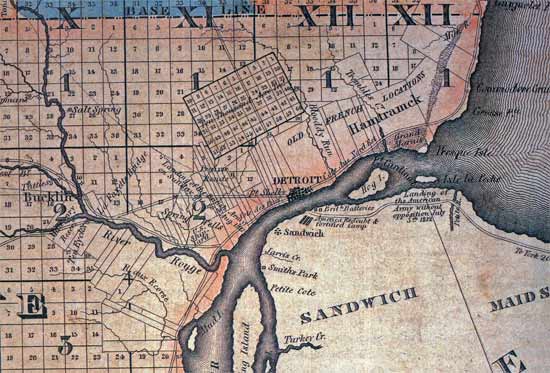
“Ribbon Farm” name comes from the way each Farm was/had very narrow land boundaries so every one could get to the water from their own land.  Long narrow farms.  It worked well no water disputes.

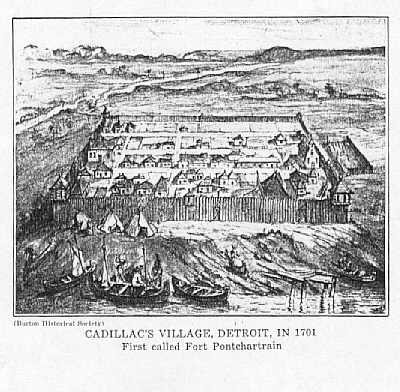
During the early to mid 1700’s Detroit was quite exclusive French.  

10 March 2013

French Ancestors of Detroit

I have many French Ancestors on my moms side that  are from the Detroit River Region.

Some of them were farmers on Belle Isle.


Family names of DuCharme Charron, Rivard, & Reaume are some of my french farming families.


Plan du Fort Detroit, French of detroit, Detroit river region, family history, genealogy


French of detroit, Detroit river region, family history, genealogy


Rivard (Detroit) Family Farm, Family History, Family Lore, truth
 

Islands of Detroit #1 Belle Isle

Belle Isle Michigan late 1800's


Detroit, MI, Family Lore, Family History, Reaume, DuCharme Carron,  French families from Detroit


Detroit, MI, Family Lore, Family History, Reaume, DuCharme Carron,  French families from Detroit


Detroit, MI, Family Lore, Family History, Reaume, DuCharme Carron,  French families from Detroit


Detroit, MI, Family Lore, Family History, Reaume, DuCharme Carron,  French families from Detroit
photos from:http://www.photographium.com/belle-isle-park

28 February 2013

1st Cousin from DNA results


Ok  You have your DNA results back from Ancestry.com
You have looked through those who have potential connects to you.  No names are familiar to you.  A few weeks or maybe a few months when all of a sudden Viola you have a closer connections to you.  That unknown 1st or 2nd second cousin.

1st, family lore, family history, genealogy, DNA, Family


Is that a 1st – 2nd cousin there?  Oh boy what does this really mean for me and them?

2nd, family lore, family history, genealogy, DNA, Family


An unknown 1st cousin, totally unknown.  So if they are unknown to each other then are their parents are most likely unknown to each other too?
Wow what does this really mean? 

In discovering facts about my own family it comes down to a child born into a family that was not 100% their family.  When in the DNA results you see that there was a different father then the other children in the family have.  ( This is in my families case).


To me this complicates everything.  Since I tend to see the big picture and not the micro side.   My thoughts go way deep as to what problems in genealogy this creates.  I do not have the answer as to what it can or what does it mean for each person affected by this kind of “Blast from the Past” knowledge.
I can however tell you that if you ever do find out this kind of DNA proof  step lightly there is the potential for a lot of family stress to come with it.

22 February 2013


Finding an old letter amongst a deceased relative old paper is pure eureka.  You just never know where you will find that shred of evidence you have suspected all along.  There it is in pen and paper.  Sorry to say this will not happen as often in the near distant future, since e-mail & texting is the common mode of non-verbal communication these days.  So those what were consider golden places for information will soon disappear.


This week though a letter was discovered which with further communication led to new family information being added.


What letters have you found that has helped you to discover more about your family?


21 February 2013

DNA Feedback

The more I come to know about autosonomal DNA the more I realize that there are many challenges to knowing who we are.  
That there can be a difference between the paper Ancestors & the DNA ancestors.

How confusing is that ?  Papers versus the chemical make-up. Is there a difference?


Family Lore, DNA, Ancestors, Family History, Family, Relatives, Gnealogy DNA, DNA Findings


 Yes in my mind there is. The Paper trail shows us who is in the family line.  While the chemical/DNA proves the paper trail.  The DNA can be full of so many surprises though.


Family Tree, Family History, Family, Ancestors, Genealogy, DNA results, DNA proof, DNA


So when you do do your DNA you may have many surprises as to who you thought you were.


Family Tree, Family History, Family, Ancestors, Genealogy, DNA, DNA proof, DNA, Egg & Sperm


Like finding out you do not get a complete set of DNA from both of your parents. 
 What you get is 50% from both. That 50% is different for each child from that union. For me I have 8 living siblings.  It could take 6 of us to be tested to find out the complete DNA we could of been born with.
 What 50% its all in the mix of egg & sperm.

Good Luck in finding out yours!!!  Oh what fun.

06 February 2013


Barefoot Genealogist

Find out if your Family Lore is true regarding your family Native American/First Nation Anestors.

Check out the video with the Barefoot Genealogist Gal 


http://www.youtube.com/watch?v=dIu-WF1LZY4&list=PL2F65E97B57EF8279&index=9

United States Bureau Of Indian Affairs

http://bia.gov    and  http://www.bia.gov/WhatWeDo/index.htm


DNA with Ancestry.com

From the Ancestry. com blog


AncestryDNA Ethnicity Prediction: Learning to Speak Genetics


Posted by Stephen Baloglu on January 11, 2013 in AncestryDNA


AncestryDNA™ is one of the most advanced autosomal DNA tests on the market, but that doesn’t mean our job is done. We are constantly working to improve our genetic ethnicity prediction models by deciphering the unique language of the human genome and employing some of the top geneticists and latest technology to help determine what it can tell us.

Dr. Ken Chahine, Sr. VP of AncestryDNA and one of our top scientists, explains some of the challenges we face when using DNA to predict ethnicity, including the work we do to innovate in this field and deliver the best product possible to our customers. Here’s some perspective on genetic ethnicity from Dr. Chahine.
 

Before AncestryDNA, ethnic origins were largely a breakdown of continental ethnicities. Most of us, however, don’t need a genetic test to determine whether we are European, African, or Asian. So, we challenged ourselves to push the boundaries of the science and attempt a more granular ethnic breakdown, especially within Europe.
Below is a map showing the detailed ethnicity coverage of AncestryDNA.

Why are we one of the first to launch a product that breaks down ethnic origins beyond the continental level? Simply put, it is very difficult. Europeans, Africans, and Asians are genetically very distinct. However, it is not as easy to ethnically distinguish between a British, a German and a French person, and it is especially difficult to decipher the ethnicity of an individual with ancestry from all three or some other comparable mixture.

The Language of Genetic Ethnicity


Since the genome was sequenced in 2000, we have made great strides in our understanding of human genetics and inheritance. The truth is, however, that the human genome is still largely a language that we don’t understand. Sure, we’ve deciphered the alphabet that makes up the 3 billion letters of our genome, but we know woefully little about its vocabulary, grammar and syntax.We know, for example, that height is inherited.


 Yet, using genetics alone still makes it difficult to predict height. Most of the genetic signatures (i.e., alleles) that we have identified as being associated with height contribute only a small percent to one’s ultimate vertical fate. In other words, while we understand how to read the letters of the human genome we don’t always know what it is telling us.


Piecing the Puzzle Together

To continue with the language metaphor, let’s assume I give you three books written in languages that you do not speak. Then I tell you, as a point of reference, what language each one is written in: one in English, one in Arabic, and the third in Chinese. Then imagine I give you another book written in one of those three languages and ask you to tell me which language it is.


 Using only the letters in the reference books, it would be relatively easy to not only determine which language the book is written in, but even what percent of the book was written in each language, if it contained a mixture of all three. This is because the alphabets of the three languages are distinct and don’t overlap.

Now imagine the same puzzle, but instead of English, Chinese and Arabic, the books are written in English, French and German. In this case, it is clearly more difficult to discern where one language ends and another begins, since all three use mostly the same basic alphabet. 


We must then rely on three basic strategies to distinguish the languages. First, the frequency of certain letters that appears to be used more or less frequently in French, English and German.

 Second, the relative position of letters, such as the combination of letters “ch,” “sch,”and “ing.” Third, letters such as “ç”,“ß,” and “ü” which are unique to certain languages. As you can see in the graph below, even though the languages are different, the frequency of the letters used in all three languages is relatively consistent. Therefore, most of the letters are of little use in distinguishing the languages.


Frequency of letter usage across three languages

There is one more important point to make—we don’t have a dictionary! That’s right, there is no genetic dictionary that tells us the frequency of the letters, the relative position of the letters, or even the unique letters that occur in different European populations. 


AncestryDNA is building this genetic dictionary by analyzing the genetic signatures of people who have a long cultural history in a specific country or region, have spoken a certain language, and practiced a single religion. Once we have the genetic sequences, our team of Ph.D scientists in genetics, bioinformatics, machine learning, and statistics work to find clues that help us distinguish genetic ethnicity and provide our customers their ethnic make-ups.

The European Challenge
The good news is that the genetic ethnicity prediction is working, albeit with some challenges. Central Europeans present the most significant difficulty, especially the French, Germans, and Dutch. 


With few geographic barriers and extensive human population movement, their genetic signatures are very similar and difficult to distinguish. The British Isles and Scandinavia are more genetically distinct, but their signatures partially overlap with each other, as well as with parts of Central Europe. All of this makes it difficult to assign predicted ethnicities. So, let’s say your German ancestry doesn’t seem to be showing up in your DNA ethnicity results or it seems like you’re getting a bit too much Scandinavian, know that the ethnicity prediction can be updated over time as we make advancements in this area.
 

This is just one example of why the ethnicity prediction portion of the AncestryDNA test is continually evolving. We are using the largest set of DNA reference samples from around the world and deeper genetic coverage in order to find those unique “letters” that will aid our analysis. In the meantime, we’re excited to have our AncestryDNA customers be a part of the breakthroughs as we continue to improve our prediction algorithms. And as they evolve, we will send you updates as new findings are discovered.

 The AncestryDNA test could have easily predicted your continental ethnicity as European, Asian, or African, but why settle for results based on the status quo? As Michelangelo is quoted as saying, “The greatest danger for most of us is not that our aim is too high and we miss it, but that it is too low and we reach it.” It’s one of the many benefits of AncestryDNA. So don’t be surprised if your ethnicity results get updated over time. This is a good thing and it just means our science team is working hard to better your experience.


If you’re interested in learning more about the new AncestryDNA, or would like to order a DNA test, you go to www.Ancestry.com/dna   


30 January 2013

Ancestors Talents

Have you inherated any of your ancestors Talents?


Can you count all of your cousins???

I thought I knew all of my possible 2nd cousins.  Guess what I was incorrect, yep  cause according to Ancestry.com  I have a new 2nd cousin.  Still don't know where we connect.  

DNA results, Ancesters, Family origins, Family, Castles, DuSyl, DuCap, Sylvester, Babbitt, Paddock, Chaddock, Family history


My sister is so busy doing her best to sort it out.  

You too can have a genealogy advantage  check out this test:  http://ldna.ancestry.com/aboutDNA.aspx

You too might find lots of relatives,  or at least someone who might have clues so you break down a brick wall.

Good Luck on your Ancester Hunting.   

29 January 2013

DNA Results

With Ancestry.com DNA results you are updated every week with new pontential couisns.  How many new cousins are you finding.

Have you been given a 2nd cousin you have no clue who they are?

What have you found out about yourself with your DNA results?

20 January 2013

Simeon N. Caryl

Simeon N. Caryl  son of Simeon J. Caryl & Hannah Paddock

Simeon J. Caryl son of Joel Caryl & Sarah****Rhodes/Russell

Hannah Paddock  daughter of Lydia Whitney & John Paddock 

Brick Wall Broken Down

Thanks to my distant cousin Joan Sickles

I now have the parentage of Hannah Paddock

Hannah married Simeon J. Caryl of Vermont

Hannah parents are John Paddock & Lydia Whitney, they had moved to New York state.

What brought me to the clue was the birth place of their son Simeon N. Caryl, which is Brownville, Jefferson, NY

I entered into Google search: Brownville, NY census 1820  Paddock?

I was astonished to see that there were several places to look for info.  So yippy I have a Brick Wall solved.

Use Google see what brick wall you can break down.  Find your Ancestors 

15 January 2013

Ireland & England Potato Famine 1845 - 1852 Ottoman EMpire & Chowtaw Nation Came to their Aid !!!


This Great Famine wiped 

Out 1 million or more people In Ireland & England.

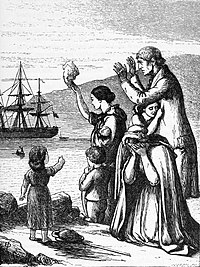
Had great devastation of the people, especially poor families & caused migration. 
 Migration to England as well to the New World.
During this famine the Government did not block exports. 
 In fact it even increased exports of potatoes.
 The poor pheasant farmer life was one of desperation  
 There were of course other factors besides the "Blight", exports & greed that contributed to the effects of the famine.

I was very pleased and surprised to learn that when others around the world heard of the plight of the people.  That there were others that wanted to help the Irish people even though 
their own government would not.


Great Famine 1842-1852, Irish Farmers, Ireland, Ancestors, Ancestors, England, Ireland, Potato Famine, Ottoman Empire, Choctaw Nation,

First was from the: 

"*Ottoman aid

According to legend, in 1845, Ottoman Sultan Abdülmecid declared his intention to send £10,000 to Irish farmers but Queen Victoria requested that the Sultan send only £1,000, because she herself had sent only £2,000. The Sultan sent the £1,000 sterling but also sent three ships full of food. According to Abdullah Aymaz in an article in The Fountain magazine, the British administration tried to block the ships, but the food arrived secretly at Drogheda harbour and was left there by Ottoman sailors.[73][74] Uncertainty remains regarding the story as shipping records relating to the port at this time appear not to have survived.[75]

Then The:

From Native American Choctaw People

In 1847, midway through the Great Irish Famine (1845–1849), a group of Native American Choctaws collected money and sent it to help starving Irish men, women and children. "It had been just 16 years since the Choctaw people had experienced the Trail of Tears, and they had faced starvation... It was an amazing gesture." according to Judy Allen, editor of the Choctaw Nation of Oklahoma's newspaper, Bishinik, based at the Oklahoma Choctaw tribal headquarters in Durant, Oklahoma. To mark the 150th anniversary, eight Irish people retraced the Trail of Tears,[76] and the donation was publicly commemorated by President Mary Robinson." "

*Found information at Wikipedia you can read more on Wikipedia

The Beauty Of Using the Census

In doing research for my Hurford/Herford line I had used the Canada West census of 1851 & 1861.  I found them on Ancestry.  In my quick work approach. I extracted what I needed then saves it to my tree.

However I did not pay much attention to who else was listed on the Census.  Imagine that right there my next set of grandparents are listed.  How cool is that.  Way cool   Use the census for more then just what you think you have glean it for the other clues it just might have for you.

Related Posts Plugin for WordPress, Blogger...